
Which Retirement Accounts Should You Withdraw From First?
One of the most common questions I receive from clients approaching retirement is:
“Which investment account should I withdraw from first?”
Should you spend down your 401(k) or traditional IRA? Should you use your taxable brokerage account first? When should you tap your Roth IRA? Or does it make sense to withdraw from a combination of accounts?
Unfortunately, there isn't a universal withdrawal order that works for every retiree.
The most tax-efficient retirement withdrawal strategy depends on several factors, including your age, tax bracket, Social Security claiming strategy, healthcare coverage, future required minimum distributions (RMDs), and estate planning goals.
A strategy that minimizes taxes for one retiree could actually increase taxes for another.
That's why successful retirement income planning generally isn't about completely spending down one account before moving on to the next. Instead, it's about coordinating withdrawals across different types of accounts to meet your spending needs while managing your lifetime tax exposure.
In this article, I'll explain how the three major types of retirement assets are taxed and walk through three examples demonstrating how different retirees might structure their withdrawals.
What Accounts Should I Withdraw From First in Retirement?
The short answer is: it depends on your individual retirement and tax situation.
You may have heard rules of thumb suggesting that you should spend your taxable brokerage accounts first, followed by traditional retirement accounts, and save your Roth IRA for last.
While that strategy can work in certain situations, following it blindly can cause you to miss valuable tax-planning opportunities.
Before deciding where your retirement income should come from, consider questions such as:
Will you retire before age 65 and rely on an Affordable Care Act (ACA) health insurance plan?
Are you concerned about large required minimum distributions later in retirement?
When do you plan to claim Social Security?
Do you currently receive a pension, or will you receive one in the future?
Are you trying to leave assets to your children or other beneficiaries?
How important is maintaining flexibility in your retirement income plan?
The answers to these questions can significantly influence which accounts you should withdraw from and when.
To understand why, you first need to understand how each type of investment account is taxed.

The 3 Main Types of Retirement Accounts
Most retirement assets can generally be grouped into three categories:
Pre-tax retirement accounts
Roth retirement accounts
Taxable investment accounts
Each receives different tax treatment, which is one of the primary reasons withdrawal planning can become so important.
1. Pre-Tax Retirement Accounts
Pre-tax retirement accounts can include:
Traditional IRAs
Traditional 401(k)s
403(b)s
457 plans
Thrift Savings Plans (TSPs)
SEP IRAs
SIMPLE IRAs
Solo 401(k)s
Profit-sharing plans
These accounts generally allow you to defer taxes while you're working.
Contributions may have reduced your taxable income in the year they were made, and investment growth, dividends, and interest generally aren't taxed annually while the assets remain inside the account.
The trade-off comes when you withdraw the money.
Distributions from traditional pre-tax retirement accounts are generally taxed as ordinary income.
That means a large IRA or 401(k) withdrawal can increase your taxable income for the year and potentially have consequences beyond the income tax due on the distribution itself.
Required Minimum Distributions
Pre-tax retirement accounts are also generally subject to required minimum distributions.
For those born in 1959 or earlier, RMDs begin at age 73. For those born in 1960 or later, they begin at age 75.
At age 73, the applicable distribution percentage is approximately 3.77%, while at age 75 it is approximately 4.07%. The percentage you are required to withdraw generally increases as you get older.
This can become particularly important for retirees with large pre-tax account balances.
For example, allowing a multi-million-dollar IRA to continue growing untouched for many years could eventually result in substantial mandatory taxable distributions.
Why Pre-Tax Withdrawals Can Affect More Than Your Tax Bracket
Withdrawals from traditional retirement accounts can increase your adjusted gross income and modified adjusted gross income.
Depending on your situation, additional income can potentially affect:
The taxation of your Social Security benefits
Medicare Income-Related Monthly Adjustment Amounts (IRMAA)
Eligibility for Affordable Care Act premium subsidies
Your federal and state income taxes
This is why automatically delaying traditional IRA withdrawals for as long as possible isn't necessarily the best strategy.
Sometimes intentionally recognizing income earlier in retirement can reduce your lifetime tax exposure.
2. Roth Retirement Accounts
The second category includes Roth IRAs and Roth workplace retirement accounts.
Roth accounts work differently from traditional retirement accounts because they're generally funded with after-tax dollars.
You don't receive the same upfront tax deduction, but qualified withdrawals can be completely tax-free.
That creates an incredibly valuable source of retirement income.
If you suddenly need an additional $20,000 and taking that money from a traditional IRA would push you into an undesirable tax situation, you may be able to take a qualified Roth withdrawal without adding $20,000 to your taxable income.
Roth IRAs also have another important advantage:
The original Roth IRA owner is not subject to required minimum distributions.
This can make a Roth IRA an extremely valuable asset to retain later in retirement.
Inherited Roth IRAs, however, are subject to different distribution requirements.
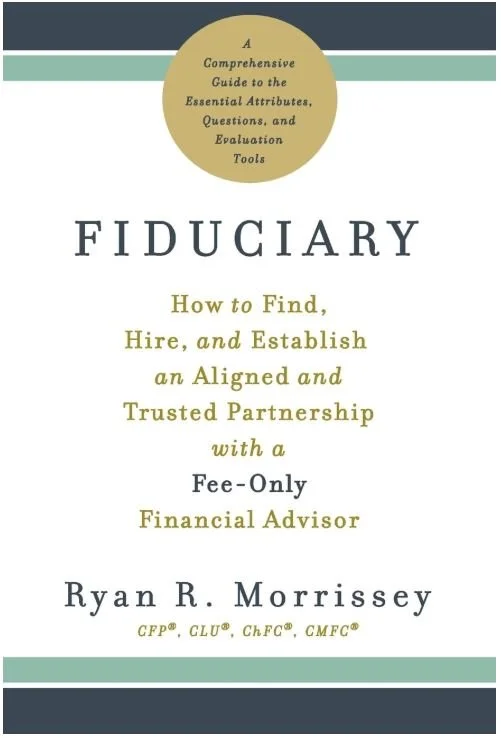
Click here to get your FREE electronic copy of:
Fiduciary - How to Find, Hire, and Establish an Aligned Trusted Partnership with a Fee-Only Financial Advisor
3. Taxable Brokerage and Investment Accounts
The third category is taxable accounts, which can include:
Brokerage accounts
Individual stock accounts
Mutual fund accounts
Money market accounts
Certificates of deposit (CDs)
Unlike retirement accounts, taxable investment accounts don't have retirement-age withdrawal restrictions or required minimum distributions.
However, interest, dividends, and realized capital gains may create taxable income.
When you sell an appreciated investment, your tax liability is generally based on the gain, not the entire amount you withdraw.
This is an important distinction.
Example: Withdrawing $100,000 Doesn't Necessarily Mean $100,000 of Taxable Income
Suppose Jeff owns stock currently worth $100,000.
He originally purchased the stock for $80,000.
If Jeff sells the entire position, he receives $100,000—but his capital gain is only:
$100,000 − $80,000 = $20,000
Assuming no other basis adjustments, only the $20,000 gain is potentially subject to capital gains tax.
If the investment was held for more than one year, the gain would generally qualify as a long-term capital gain. If held for one year or less, the gain would generally be taxed as a short-term capital gain at ordinary income tax rates.
This tax treatment can make taxable brokerage accounts an attractive source of retirement income.
Similarly, withdrawing principal from a money market account or redeeming a CD generally doesn't create a capital gain simply because you're accessing your money. The interest earned, however, is generally taxable as ordinary income.
Don't Forget About Your Tax Deductions
Another important part of retirement withdrawal planning is understanding that your taxable income isn't necessarily the same as your total income.
Deductions can reduce the amount of income ultimately subject to federal income tax.
For 2026, the standard deduction referenced in our planning examples is:
$16,100 for single filers
$32,200 for married couples filing jointly
$24,150 for heads of household
Certain taxpayers age 65 and older may also qualify for an additional senior deduction of up to $6,000 per eligible person through 2028, subject to the applicable rules and income limitations.
These deductions can create valuable opportunities for strategic retirement account withdrawals and Roth conversions.
Retirement Withdrawal Strategy Example #1: Retiring Before Medicare
Let's look at Jonathan.
Jonathan is a single 57-year-old retired engineer who accumulated:
$1.5 million in a traditional 401(k)
$350,000 in a taxable brokerage account
$150,000 in a Roth IRA
$200,000 in a money market account
Jonathan plans to be fully retired beginning January 1, 2027.
Because he won't yet be eligible for Medicare and his former employer doesn't provide retiree health insurance, he plans to purchase coverage through the Affordable Care Act marketplace.
This makes controlling his modified adjusted gross income extremely important.
For purposes of this example, assume Jonathan needs to keep his MAGI below $65,000 to maintain the ACA subsidy he's targeting.
How Could Jonathan Structure His Withdrawals?
Suppose Jonathan takes a $50,000 distribution from his traditional 401(k).
He also expects approximately:
$7,000 of interest from his money market account
$3,500 of dividends from his taxable investments
That gives Jonathan approximately:
$50,000 + $7,000 + $3,500 = $60,500 of income
This leaves some room beneath his assumed $65,000 target.
If Jonathan needs additional cash to support his lifestyle, he could potentially withdraw principal from his money market account without the withdrawal itself creating additional taxable income.
He could also consider selling investments from his taxable brokerage account, but he'd need to determine how much of the sale represents a taxable capital gain.
Why Jonathan Shouldn't Automatically Empty His Brokerage Account First
Jonathan has multiple competing priorities.
He needs money to live on, but he also wants to control his MAGI for healthcare purposes.
He could potentially make additional traditional retirement account withdrawals or complete a Roth conversion, but he'd need to carefully monitor the resulting income.
His withdrawal strategy therefore isn't:
“Spend account A, then account B, then account C.”
Instead, he can strategically combine accounts to generate the cash he needs while managing his taxable income.
That's the flexibility good retirement income planning can provide.
Retirement Withdrawal Strategy Example #2: Reducing Future RMDs With Roth Conversions
Now consider Walter and Amy.
They're both 62 and recently retired.
They have accumulated:
$4 million in pre-tax retirement accounts
$1 million in taxable investments
$500,000 in a money market account
$0 in Roth accounts
Their primary concern isn't necessarily minimizing this year's tax bill.
They're concerned about the size of their future required minimum distributions and the potential tax burden they could eventually leave to their two children.
Walter and Amy plan to wait until age 67 to claim Social Security.
That gives them approximately five years before Social Security begins during which they could consider sizable Roth conversions.
Taking Advantage of Lower-Income Retirement Years
The years immediately after retirement but before Social Security and RMDs begin can create an attractive tax-planning window.
Instead of simply living off their taxable accounts and leaving their $4 million of pre-tax assets untouched, Walter and Amy could intentionally convert a portion of those assets to Roth IRAs.
Using the assumptions from our example, they could convert approximately $133,000 while remaining within the tax bracket they're targeting.
If they converted approximately $133,000 per year for five years, they could move roughly:
$133,000 × 5 = $665,000
from pre-tax retirement accounts into Roth IRAs.
They'd pay taxes on the conversions today, but the converted assets could then potentially grow inside the Roth accounts and eventually be distributed tax-free if the requirements for qualified distributions are satisfied.

Want to see my YouTube Video on This Topic? — Click Here
Why Would They Voluntarily Pay Taxes Early?
Because their objective isn't simply to pay the smallest possible tax bill this year.
Their objective is to potentially reduce their lifetime tax exposure.
If their traditional retirement accounts continue growing until RMDs begin, they could eventually be forced to recognize substantially more taxable income.
Large RMDs could also interact with Social Security taxation and Medicare IRMAA premiums.
Additionally, if leaving assets to their children is important, Walter and Amy may prefer leaving Roth assets rather than a very large traditional IRA.
They could use their money market account for additional spending needs while completing their Roth conversion strategy.
Again, the best withdrawal strategy depends on the goal.
Retirement Withdrawal Strategy Example #3: Managing Social Security Taxes
Our third retiree is Christian.
Christian is single, age 68, and already receiving Social Security.
He has:
$700,000 in pre-tax retirement accounts
$300,000 in a taxable brokerage account
$200,000 in a money market account
He receives $30,000 per year from Social Security and needs another $40,000 per year to cover his retirement expenses.
Christian has several ways to generate that $40,000.
And each option can produce a different tax result.
Option 1: Use the Money Market Account
Christian could potentially take most of his additional spending money from his existing money market balance.
Withdrawing the principal itself doesn't create taxable income.
Using the assumptions from our example, Christian also receives approximately:
$3,000 of annual dividends
$6,000 of annual interest
By keeping his other taxable income relatively low, Christian may be able to minimize or potentially eliminate federal income tax on his Social Security benefits under the assumptions used in this example.
Option 2: Take a Small IRA Distribution
Instead, Christian might decide to take:
$15,000 from his IRA
$25,000 from his money market account
Under the assumptions used in our example, this would result in approximately $560 of federal income tax.
That could still be worthwhile if Christian's broader objective is to gradually reduce his pre-tax retirement balance before RMDs begin.
Option 3: Take the Entire $40,000 From His IRA
Now suppose Christian takes the entire $40,000 from his traditional IRA.
That additional income can cause more of his Social Security to become taxable.
Under the assumptions used in our example, his federal income tax could increase to approximately $5,600.
This illustrates an important concept in retirement tax planning:
One additional dollar of retirement account income can sometimes cause more than one dollar to become taxable.
An IRA withdrawal can create taxable income on its own while simultaneously causing a larger percentage of your Social Security benefit to become taxable.
That's why retirees shouldn't evaluate a withdrawal solely based on the tax rate applied to the retirement account distribution.
Should You Withdraw From Your IRA or Brokerage Account First?
This is where the answer becomes unsatisfying but important:
It depends.
Taking money from your brokerage account first could be beneficial if doing so allows you to recognize relatively small capital gains while keeping ordinary income low.
But spending down the brokerage account while leaving a massive traditional IRA untouched could eventually result in larger RMDs.
Conversely, aggressively withdrawing from your IRA early in retirement could generate unnecessary ordinary income, increase the taxation of Social Security, affect ACA subsidies, or eventually increase Medicare premiums.
For many retirees, the best solution may be a combination.
You might take some money from your IRA, some from cash or taxable investments, complete a partial Roth conversion, and leave your Roth IRA untouched.
Then you might use a completely different strategy the following year.
Should I Save My Roth IRA for Last?
There can be compelling reasons to preserve Roth assets.
Qualified Roth IRA withdrawals don't increase taxable income, and Roth IRAs aren't subject to RMDs for the original owner.
That makes Roth assets valuable for:
Large unexpected expenses
Years when additional taxable income would be particularly costly
Managing Medicare IRMAA exposure
Supplementing income without increasing taxable income
Estate planning
Providing tax diversification later in retirement
But that doesn't mean you should never spend Roth assets.
If using Roth money helps you avoid an undesirable tax consequence in a particular year, it may be exactly the account you should use.
The objective is to maintain flexibility rather than follow an arbitrary withdrawal order.
How Does Social Security Affect Your Withdrawal Strategy?
Your Social Security claiming decision can play a major role in determining where retirement income should come from.
Some retirees may benefit from delaying Social Security while using portfolio assets to fund their expenses.
This can accomplish several things.
First, delaying Social Security can increase your eventual monthly benefit.
Second, years before Social Security begins may provide opportunities to recognize taxable retirement income or complete Roth conversions while your overall income is relatively low.
Once Social Security, pensions, and RMDs all begin, you may have considerably less control over your taxable income.
That's why the years immediately after retirement can be some of the most valuable tax-planning years of your life.
Don't Forget About Medicare IRMAA
Once you're on Medicare, your withdrawal strategy can also affect your Medicare premiums.
Higher modified adjusted gross income can trigger Medicare's Income-Related Monthly Adjustment Amount, commonly known as IRMAA.
This can increase your Medicare Part B and Part D costs.
Large IRA withdrawals, Roth conversions, and realized capital gains can all potentially increase MAGI.
That doesn't necessarily mean you should avoid realizing additional income.
Paying additional Medicare premiums for a year could still make sense if a Roth conversion creates substantially greater long-term tax savings.
But the potential IRMAA cost should be incorporated into your analysis rather than discovered after the fact.
Estate Planning Can Also Influence Which Accounts You Spend First
Your withdrawal strategy shouldn't end with your own lifetime.
If leaving money to your children or other beneficiaries is important, consider what type of assets you're leaving behind.
Different accounts can have dramatically different tax consequences for your heirs.
For example, under current law, many taxable investments receive a step-up in cost basis at death.
That can make highly appreciated taxable assets attractive legacy assets in certain situations.
Traditional retirement accounts can create a different challenge because beneficiaries may eventually owe ordinary income tax when distributions are taken.
Roth accounts can provide beneficiaries with potentially tax-free distributions, assuming applicable requirements are satisfied, although inherited Roth accounts remain subject to distribution rules.
This is another reason the conventional advice to simply “spend your taxable accounts first” may not always produce the best outcome.
Your Retirement Withdrawal Strategy Should Change Over Time
Perhaps the most important takeaway is that retirement income planning isn't a one-time decision.
The strategy you use at age 60 may be completely different from the strategy you use at 65, 70, or 75.
That's because:
Tax laws change
Tax brackets change
Markets fluctuate
Your investments grow or decline
Your spending changes
Social Security begins
Medicare begins
RMDs eventually begin
Your estate planning priorities may change
For this reason, I believe retirees should review their withdrawal strategy every year.
You should determine how much money you'll need from your portfolio, estimate your other income, review your current tax situation, and then determine which accounts should fund your spending.

Final thoughts
There isn't one universal answer.
The most tax-efficient retirement withdrawal strategy may involve using multiple accounts in the same year.
For one retiree, preserving taxable income to qualify for an ACA subsidy may be the priority.
For another, intentionally recognizing additional income through Roth conversions may help reduce future RMDs.
Another retiree may want to carefully manage IRA distributions to reduce the amount of Social Security subject to federal income tax.
And someone else may prioritize leaving Roth and taxable assets to their children.
The important question isn't simply:
“Which account should I spend first?”
A better question is:
“Which combination of accounts allows me to fund my retirement while managing taxes today, taxes later in retirement, healthcare costs, and the assets I ultimately want to leave behind?”
That's a much more complicated question—but answering it can potentially save you a significant amount of money throughout retirement.
Working with a qualified financial advisor who specializes in retirement income and tax planning can help you coordinate withdrawals across multiple account types, evaluate Roth conversions, manage healthcare-related income limits, and develop a retirement income strategy based on your individual goals.
At Morrissey Wealth Management, this is something we review with our clients on an ongoing basis.
If you'd like to learn more about working with Morrissey Wealth Management, visit RetireWithRyan.com and click “Work With Ryan.”
Have a great week—and I’ll talk to you next Tuesday.
Written by Ryan Morrissey CFP®, CLU®, CHFC®, CMFC
Founder & Principal Advisor of Morrissey Wealth Management
Host of the Retire with Ryan Podcast
____________________________________________________________________________________________________________________________
Frequently Asked Questions About Retirement Withdrawals
What is the best order to withdraw money in retirement?
There is no universal withdrawal order. The appropriate strategy depends on your tax bracket, Social Security benefits, pension income, healthcare coverage, RMDs, investment balances, and estate planning goals. Many retirees may benefit from withdrawing from multiple account types during the same year.
Should I withdraw from my 401(k) or brokerage account first?
It depends on your tax situation. Traditional 401(k) withdrawals are generally taxed as ordinary income, while only the realized gain from selling an appreciated taxable investment is generally subject to capital gains tax. However, leaving a large 401(k) untouched could lead to larger RMDs later, so both current and future taxes should be considered.
Should I withdraw from my Roth IRA last?
Preserving a Roth IRA can provide valuable tax flexibility because qualified withdrawals are generally tax-free and Roth IRAs aren't subject to RMDs for the original owner. However, there may be years when taking a Roth withdrawal is advantageous because it allows you to access cash without increasing taxable income.
Can IRA withdrawals make my Social Security taxable?
Yes. Additional IRA income can cause a greater portion of your Social Security benefits to become subject to federal income tax. This is why retirement account withdrawals and Social Security taxation should be evaluated together.
Can retirement withdrawals increase my Medicare premiums?
Yes. Traditional retirement account withdrawals, Roth conversions, and realized capital gains can increase modified adjusted gross income and potentially trigger Medicare IRMAA surcharges.
Why would I withdraw from my IRA before RMDs begin?
Taking strategic distributions or completing Roth conversions before RMDs begin can potentially reduce the size of your pre-tax retirement accounts and future mandatory distributions. Whether this is beneficial depends on your current and projected future tax situation.
How often should I review my retirement withdrawal strategy?
Ideally, you should review your retirement income and withdrawal strategy annually. Changes to tax laws, investment values, spending, Social Security, Medicare, and other income sources can alter which accounts are most advantageous to use.