
Restricted Stock Units (RSU) Explained: How They're Taxed and What You Should Do When They Vest
Receiving Restricted Stock Units (RSUs) as part of your compensation package can be an exciting reward for your hard work—but it also comes with important tax considerations and financial planning decisions. Whether you work for Disney, ESPN, Amazon, Google, Apple, Microsoft, or another publicly traded company, understanding how RSUs work can help you avoid costly mistakes and make more informed investment decisions.
In this article, I'll explain what Restricted Stock Units are, how they're taxed, and discuss several strategies you can consider when your shares begin to vest.
What Are Restricted Stock Units (RSUs)?
A Restricted Stock Unit (RSU) is a form of equity compensation offered by many employers. Instead of receiving additional cash compensation, employees receive a promise that company shares—or the cash equivalent—will be delivered at a future date once certain conditions have been satisfied.
Those conditions are known as vesting requirements.
Unlike stock options, RSUs do not require you to purchase shares. Once the vesting requirements are met, the shares become yours automatically.
Because of this, RSUs have become one of the most common forms of long-term compensation among large publicly traded companies.

How Do RSUs Vest?
Most companies use one of three vesting structures.
1. Time-Based Vesting
This is by far the most common vesting schedule.
For example, suppose your employer grants you 900 RSUs with a three-year vesting schedule.
You might receive:
300 shares after Year 1
300 shares after Year 2
300 shares after Year 3
As long as you remain employed through each vesting date, the shares become yours.
Many employers—including Disney and ESPN—use a similar time-based vesting schedule.
2. Performance-Based Vesting
Some companies tie vesting to performance metrics rather than time.
Examples include:
Revenue goals
Earnings per share (EPS)
Profit margin targets
Individual performance objectives
If the specified performance targets are achieved, the shares vest.
3. Liquidity Event Vesting
Private companies sometimes delay vesting until a significant corporate event occurs.
Examples include:
Initial Public Offering (IPO)
Company acquisition
Corporate merger
Once the triggering event occurs, employees become eligible to receive their shares.
What Happens If You Leave Your Employer?
This is one of the biggest misconceptions employees have.
Generally speaking, unvested RSUs are forfeited when you leave your employer.
If your company granted you 1,000 shares but only 400 have vested before you resign, retire, or are terminated, the remaining 600 shares are usually forfeited.
This is one reason employers use RSUs—they serve as an employee retention incentive.
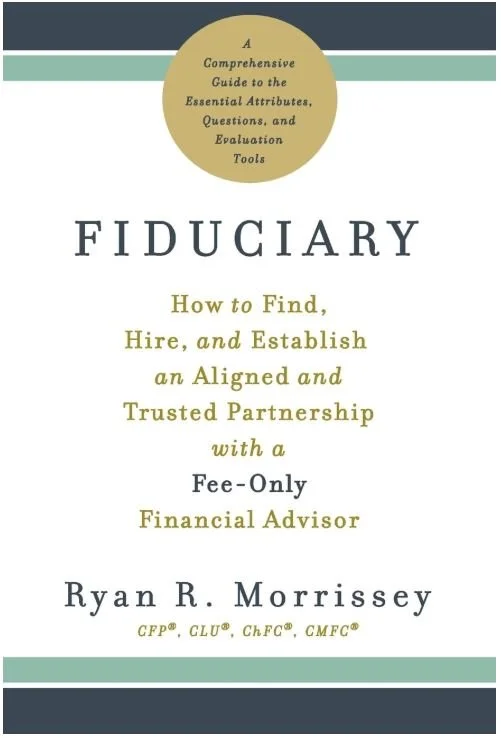
Click here to get your FREE electronic copy of: Fiduciary - How to Find, Hire, and Establish an Aligned Trusted Partnership with a Fee-Only Financial Advisor
How Are Restricted Stock Units Taxed?
Understanding RSU taxation is critical because there are two separate taxable events.
Tax Event #1: When Your RSUs Vest
The first taxable event occurs when your shares vest.
At vesting, the fair market value of your shares is treated as ordinary income, just like your salary.
This amount is:
Reported on your W-2
Subject to federal income tax
Subject to state income tax (where applicable)
Subject to Social Security and Medicare taxes (FICA), subject to applicable wage limits.
Most employers automatically withhold taxes through what's known as a sell-to-cover transaction.
What Is a Sell-to-Cover Transaction?
Instead of asking you to write a check for the taxes owed, your employer simply sells enough vested shares to cover the estimated withholding requirements.
For example:
100 shares vest
25 shares are automatically sold to cover taxes
75 shares are deposited into your brokerage account
This process happens automatically for most employees.
Tax Event #2: When You Sell the Shares
Once your shares have vested, they become a normal investment.
Your cost basis becomes the fair market value on the vesting date.
From that point forward:
Any additional appreciation becomes a capital gain.
Any decline creates a capital loss.
If you sell:
Within one year of vesting → Short-term capital gain (taxed as ordinary income)
After one year → Long-term capital gain (generally taxed at more favorable capital gains rates)
For many employees, understanding this second taxable event is just as important as understanding the taxation at vesting.
Example of RSU Taxation
Suppose Sharon receives 100 Disney shares through an RSU grant.
On the vesting date:
Disney stock is trading at $100 per share
Total vested value = $10,000
That $10,000 is reported as ordinary income on Sharon's W-2.
Several months later, Disney stock increases to $115 per share.
If Sharon sells:
Sale proceeds = $11,500
Cost basis = $10,000
Capital gain = $1,500
Only the additional $1,500 is taxed as a capital gain because Sharon already paid ordinary income tax on the original $10,000 when the shares vested.
What Should You Do When Your RSUs Vest?
There isn't a universal answer.
Instead, your decision should align with your overall financial plan.
Here are three common strategies.
Option 1: Hold the Shares
Some employees simply hold their vested shares.
If the company performs well over many years, this strategy can significantly increase wealth.
However, there is an important risk to consider.
Because your paycheck already depends on your employer, holding a large percentage of your investment portfolio in the same company means your employment income and your investments depend on one business.
If your employer experiences financial difficulties, both your income and your investment portfolio could decline simultaneously.
Option 2: Sell the Shares Immediately
Many employees sell their RSUs as soon as they vest.
The proceeds can then be used to:
Purchase a home
Pay for home renovations
Cover college expenses
Pay off debt
Build an emergency fund
Increase retirement savings
Selling immediately also minimizes future concentration risk.
Option 3: Sell and Reinvest
This is often the strategy I recommend discussing with clients.
Instead of holding a concentrated position in one company, you can:
Sell the shares after vesting
Reinvest the proceeds into a diversified investment portfolio
For many investors, that may include:
S&P 500 Index Funds
Total Stock Market Index Funds
Bond Funds
International Equity Funds
Other investments appropriate for their financial goals and risk tolerance
Diversification helps reduce the risk that one company's performance will disproportionately affect your long-term financial success.

Prefer to listen to my podcast on this topic? Click Here
Should You Hold Company Stock?
This depends on several factors, including:
Your risk tolerance
How much of your net worth is already invested in company stock
Your retirement timeline
Your confidence in the company's future
Your overall financial plan
Some investors have built substantial wealth by holding company stock for decades.
Others have experienced significant losses after becoming overly concentrated in one employer.
There is no one-size-fits-all answer.
Frequently Asked Questions
Are RSUs taxed twice?
No.
RSUs are taxed as ordinary income when they vest.
After vesting, only future appreciation (or depreciation) is taxed when you eventually sell the shares.
Can I keep my RSUs after leaving my employer?
Generally, only vested shares remain yours.
Most unvested RSUs are forfeited once employment ends.
Do I pay taxes if I don't sell my vested shares?
Yes.
The value of the shares is taxable as ordinary income when they vest—even if you continue holding them.
Should I sell my RSUs immediately?
That depends on your overall financial situation, tax bracket, risk tolerance, and investment strategy.
Many financial advisors recommend evaluating whether holding a large position in your employer's stock creates unnecessary concentration risk.

Final Thoughts
Restricted Stock Units can be an excellent component of your overall compensation package and provide meaningful opportunities to build long-term wealth. However, understanding when they're taxed, how they're taxed, and what your options are once they vest is critical to making informed financial decisions.
For many employees, the decision isn't simply whether to hold or sell their RSUs—it's how those shares fit into their broader retirement plan, tax strategy, and investment allocation. Working with a financial advisor and tax professional can help you evaluate concentration risk, estimate future tax liabilities, and determine whether selling, holding, or reinvesting your RSUs aligns with your long-term financial goals.
If you're receiving Restricted Stock Units and would like help developing a tax-efficient strategy for managing them, consider working with a Certified Financial Planner™ professional who can help coordinate your compensation, investment portfolio, and retirement plan into one comprehensive strategy.
As always have a wonderful day,
a better weekend,
and I look forward to writing to you next Friday!
Written by Ryan Morrissey CFP®, CLU®, CHFC®, CMFC
Founder & Principal Advisor of Morrissey Wealth Management
Host of the Retire with Ryan Podcast