5 Reasons Retirees Run Out of Money— and How to Help Prevent It
running out of money in retirement, how to avoid running out of money in retirement, retirement income planning, retirement withdrawal strategy, sequence of returns risk, healthcare costs in retirement, long-term care costs, inflation in retirement, retirement spending strategy
For many Americans, one of the biggest fears surrounding retirement isn't dying too soon—it's living long enough to run out of money.
According to Allianz Life's 2026 Annual Retirement Study, two out of three people surveyed said they were more worried about running out of money during their lifetime than about dying prematurely. And running out of retirement savings isn't a concern limited to people who haven't saved enough. Poor spending decisions, unexpected healthcare expenses, market declines, and inflation can put even substantial retirement portfolios under pressure.
The good news is that many of these risks can be planned for.
After nearly three decades as a financial advisor, I've seen several recurring issues that can jeopardize an otherwise successful retirement plan. In this article, we'll look at five common reasons retirees can run out of money—and steps you can take to reduce those risks.

1. Spending Too Much Too Early in Retirement
You've spent decades saving for retirement. Once you finally retire, it's understandable to want to enjoy that money.
Maybe you want to renovate your home, travel more frequently, buy a vacation property, or finally pursue hobbies you didn't have time for while working.
There's nothing inherently wrong with spending more during retirement. The problem is spending without a long-term plan.
A retirement beginning in your early or mid-60s could potentially last 30 years or longer. Spending too aggressively during the first decade can significantly reduce the assets available to support you later in life.
The Go-Go, Slow-Go, and No-Go Years
Retirement spending is sometimes divided into three phases:
Go-Go Years: Early retirement, when you're generally healthier, more active, and spending more on travel, entertainment, and hobbies.
Slow-Go Years: The middle years of retirement, when activity and discretionary spending may begin to decline.
No-Go Years: Later retirement, when travel and entertainment expenses may fall but healthcare and long-term care expenses can increase.
You don't necessarily need to spend the same amount every year.
Some retirees intentionally spend more during their go-go years because they know they may travel less later. Others maintain relatively consistent spending because they anticipate healthcare expenses eventually replacing travel and entertainment costs.
Either strategy can work.
What's important is having a plan for how much your portfolio can reasonably support.
Consider a Dynamic Withdrawal Strategy
Rather than simply withdrawing the same percentage from your portfolio every year, one approach is to use a dynamic retirement withdrawal strategy.
With our clients, we often consider the Guyton-Klinger guardrail strategy. This approach establishes an initial withdrawal amount and then periodically adjusts spending based on portfolio performance.
For example, under certain assumptions, a retiree may begin with a withdrawal around 5% of the portfolio and then adjust future withdrawals based on investment performance and predetermined "guardrails."
If the portfolio performs well, spending may be allowed to increase.
If the portfolio experiences prolonged losses, spending may need to decrease.
The important point isn't that every retiree should withdraw exactly 5%. Your sustainable withdrawal rate depends on your age, investment allocation, income sources, spending needs, life expectancy, and other circumstances.
The goal is to establish a repeatable retirement income strategy instead of simply withdrawing money whenever you want it.
Those additional $5,000, $10,000, or $20,000 withdrawals can add up quickly. The more you withdraw today, the less money remains invested to potentially support you later.
2. Giving or Lending Too Much Money to Family
For many retirees, helping children and grandchildren is one of the most rewarding uses of their wealth.
Maybe you want to help a child buy their first home, pay for a grandchild's education, contribute toward a wedding, or help a family member through a difficult financial period.
But there's an important rule to remember:
You shouldn't jeopardize your own retirement to fund someone else's financial goals.
Before making a significant gift, consider how it affects your retirement cash-flow projections.
Ask yourself:
If I never receive this money back, will my retirement plan still work?
This is especially important when lending money to family.
You can structure a legitimate family loan and charge interest, potentially at a rate that's more attractive to your family member than what they could receive from a bank. But you also have to consider the personal consequences if they don't repay you.
Financial disagreements can create significant stress within families.
If you can afford to give the money away without jeopardizing your retirement, you may decide that making an outright gift is preferable to creating a loan that needs to be collected.
But if the gift would meaningfully reduce your probability of maintaining your lifestyle throughout retirement, saying no may be the financially responsible decision.
Your children may have decades remaining to work, earn income, and save.
As a retiree, you may not have the same opportunity to replace assets you've already spent.
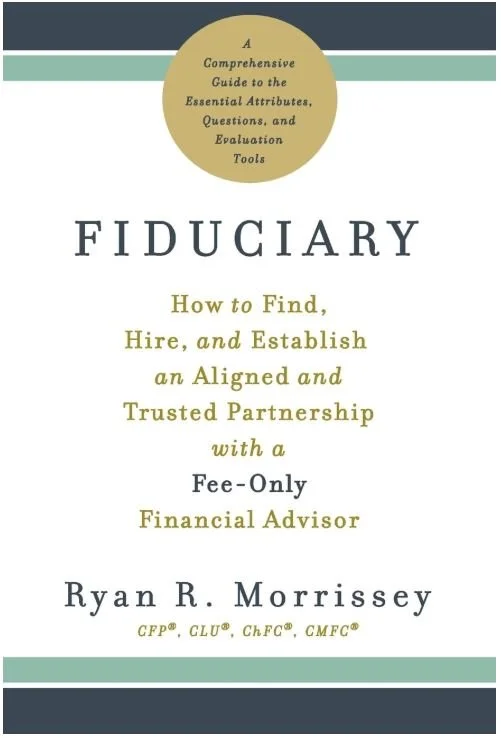
Click here to get your FREE electronic copy of:
Fiduciary - How to Find, Hire, and Establish an Aligned Trusted Partnership with a Fee-Only Financial Advisor
3. Failing to Plan for Healthcare and Long-Term Care Costs
Healthcare can be one of the most underestimated expenses in retirement, particularly for people who retire before becoming eligible for Medicare.
Retiring Before Age 65
Medicare eligibility generally begins at age 65.
If you retire at 60, for example, you may need to fund approximately five years of health insurance before Medicare begins.
This can be a major adjustment for someone accustomed to employer-sponsored healthcare.
While working, your employer may have paid a substantial portion of your health insurance premium. Once retired, you may become responsible for much more—or all—of the cost.
Depending on your income and circumstances, you may qualify for an Affordable Care Act premium tax credit. But ACA eligibility can make tax planning particularly important because your income can affect the amount of assistance you receive.
This is why healthcare expenses should be estimated before deciding whether you can afford to retire early.
Medicare Isn't Free Either
Reaching age 65 doesn't eliminate healthcare expenses.
Most retirees will have Medicare premiums and additional out-of-pocket healthcare costs.
Higher-income retirees can also be subject to the Income-Related Monthly Adjustment Amount, or IRMAA, which can increase Medicare Part B and Part D costs.
Large IRA withdrawals, Roth conversions, capital gains, and other sources of income can potentially affect your modified adjusted gross income and, consequently, your future Medicare premiums.
Don't Ignore Long-Term Care
Long-term care can pose an even larger threat to a retirement portfolio.
Depending on where you live and the amount of assistance required, in-home care can cost tens of thousands of dollars annually. Full-time nursing care can be substantially more expensive.
In Connecticut, for example, full-time nursing care can approach $190,000 per year based on the figures discussed in the podcast.
For married couples, this risk can be especially concerning.
If one spouse requires years of expensive care, a significant portion of the couple's assets could be spent while the healthy spouse still needs sufficient resources to fund their own retirement.
Potential planning strategies may include evaluating:
Long-term care insurance
Hybrid life insurance/long-term care policies
Self-funding a potential long-term care event
Estate and Medicaid planning with a qualified attorney
Maintaining sufficient liquid assets for healthcare expenses
The appropriate solution will vary significantly from one family to another.
The important thing is to address the possibility before a long-term care event occurs.

Want to see my YouTube Video on This Topic? —Click Here
4. Ignoring Sequence-of-Returns Risk
One of the biggest investment risks retirees face is something known as sequence-of-returns risk.
The concept is relatively straightforward.
Imagine two retirees who begin retirement with identical portfolios and ultimately experience the same average investment return.
One experiences strong investment returns during the first several years of retirement.
The other experiences a major bear market immediately after retiring.
Their outcomes can be dramatically different.
Why Early Market Losses Can Be So Damaging
When you're still working and contributing to your retirement accounts, a market decline can actually provide opportunities to purchase investments at lower prices.
Retirement changes the equation.
Now you're withdrawing money.
If your investments decline substantially while you're simultaneously taking withdrawals, you may have to sell more shares to generate the same amount of income.
Those shares are no longer invested when markets eventually recover.
For example, suppose you need $50,000 from your portfolio.
If your investments have recently declined significantly, generating that $50,000 could require selling substantially more assets than it would have before the decline.
Repeated withdrawals during an extended bear market can permanently damage a portfolio's ability to recover.
How Can You Manage Sequence-of-Returns Risk?
This is another reason a dynamic withdrawal strategy can be valuable.
Instead of assuming you can increase spending every year regardless of market conditions, your retirement income plan can establish predetermined rules for responding to poor investment performance.
That might mean temporarily reducing discretionary spending following a significant market decline.
You might also maintain sufficient bonds, cash, or other relatively conservative investments that can be used for withdrawals rather than selling stocks after a substantial decline.
Reducing your spending by 10% for a period of time probably isn't exciting.
But making temporary adjustments can be far better than continuing to spend aggressively while your portfolio declines and discovering 15 or 20 years later that you've depleted your retirement savings.
5. Underestimating Inflation
The fifth major risk is one that can quietly erode your retirement lifestyle over decades:
Inflation.
Inflation reduces the purchasing power of your money.
Even relatively modest inflation becomes significant when compounded over a 20- or 30-year retirement.
For example, something that costs $50,000 today won't necessarily cost $50,000 ten or twenty years from now.
Your retirement income therefore needs the ability to grow.
There are several ways retirees can attempt to protect themselves against inflation.
Consider Delaying Social Security
Social Security benefits receive annual cost-of-living adjustments when applicable.
Delaying Social Security can increase the base benefit upon which future COLAs are applied.
For someone who can afford to delay claiming, a larger inflation-adjusted Social Security benefit can provide valuable guaranteed income later in retirement.
Of course, delaying Social Security isn't appropriate for everyone. Your health, life expectancy, marital status, employment, portfolio, and other income sources should all be considered.
Evaluate Pension COLAs
If you're fortunate enough to receive a pension, determine whether your pension includes a cost-of-living adjustment.
Some pension plans offer different benefit options that may provide inflation protection.
Carefully evaluate those choices before making an irrevocable pension election.
Maintain an Appropriate Allocation to Stocks
Retirees sometimes assume retirement means eliminating stocks from their portfolio.
That can create a different type of risk.
Cash, CDs, and bonds can play important roles in a retirement portfolio, particularly for near-term spending needs and reducing volatility.
But your retirement may last several decades.
Maintaining an appropriate allocation to equities can provide the long-term growth necessary to help your portfolio keep pace with inflation.
A retiree with a 30-year time horizon is still a long-term investor.
How Can You Avoid Running Out of Money in Retirement?
There is no strategy that can completely eliminate retirement risk.
Markets will decline. Inflation will fluctuate. Healthcare expenses can change. Unexpected home repairs will happen. Family members may need assistance.
The objective isn't to predict every expense.
It's to build a retirement plan that's flexible enough to respond when circumstances change.
Before retiring, consider whether you can answer these questions:
How much can I reasonably spend from my portfolio each year?
How would a major gift to my children affect my retirement?
How will I pay for health insurance before Medicare?
How would my plan handle a long-term care event?
What happens if the stock market falls 30% shortly after I retire?
How will my income keep pace with inflation for the next 20 or 30 years?
If you can't confidently answer these questions, they're worth addressing before you leave the workforce.
Retirement Planning Is About More Than How Much You've Saved
Reaching retirement with $1 million, $2 million, or even more doesn't automatically mean you'll never run out of money.
How you manage those assets can be just as important as how much you've accumulated.
Overspending during the early years, giving away too much money, failing to account for healthcare expenses, withdrawing aggressively during a market downturn, or allowing inflation to gradually erode your purchasing power can all weaken an otherwise healthy retirement plan.
A comprehensive retirement plan should consider your spending, investment strategy, Social Security, pensions, taxes, healthcare, long-term care, and estate planning together.
And that plan shouldn't sit untouched for the next 30 years.
Review it regularly.
As markets, tax laws, healthcare costs, your spending, and your personal circumstances change, your retirement strategy should change with them.
The ultimate goal isn't simply to reach retirement with a certain amount of money.
It's to create a sustainable income strategy that allows you to enjoy your retirement today without unnecessarily jeopardizing your financial security tomorrow.
Have a great week—and I’ll talk to you next Tuesday.
Written by Ryan Morrissey CFP®, CLU®, CHFC®, CMFC
Founder & Principal Advisor of Morrissey Wealth Management
Host of the Retire with Ryan Podcast
____________________________________________________________________________________________________________________________
Frequently Asked Questions
What is the biggest risk of running out of money in retirement?
There isn't one single risk for every retiree. Overspending, healthcare and long-term care expenses, poor market returns early in retirement, inflation, and large gifts to family can all contribute to prematurely depleting retirement savings.
How much can I safely withdraw from my retirement portfolio?
There isn't a universal safe withdrawal rate. The appropriate amount depends on your age, life expectancy, investment allocation, guaranteed income, spending needs, market conditions, and willingness to adjust spending. Dynamic withdrawal strategies can adjust retirement income as circumstances change.
What is sequence-of-returns risk?
Sequence-of-returns risk is the danger of experiencing poor investment returns early in retirement while simultaneously withdrawing money from your portfolio. Early losses combined with withdrawals can make it more difficult for a portfolio to recover.
How should I plan for healthcare expenses in retirement?
Estimate health insurance expenses before retiring, particularly if you'll retire before Medicare eligibility at age 65. Your plan should also consider Medicare premiums, potential IRMAA surcharges, out-of-pocket expenses, and the possibility of needing long-term care.
Should retirees still invest in stocks?
Stocks can remain an important part of a diversified retirement portfolio because retirees may need their assets to grow for several decades and keep pace with inflation. The appropriate stock allocation depends on your risk tolerance, spending requirements, time horizon, and other sources of income.