
Are Bonds Still a Good Investment for Retirement in 2026?
Bonds are supposed to be the “safe” part of a retirement portfolio. So when retirees open their investment statements and see their bond funds declining, it naturally raises some questions:
Why are my bonds losing value? Should I sell them? And are bonds still a good investment for retirement?
The short answer to that last question is yes—bonds can still play an important role in a diversified retirement portfolio.
Bond prices fluctuate just like other investments, and the recent weakness in the bond market does not necessarily mean bonds are no longer useful for retirees. In fact, higher interest rates can create opportunities for long-term investors because newly issued bonds may offer more attractive yields.
The key is understanding why bonds decline, how interest rates affect bond prices, and what role bonds are intended to play within your overall retirement strategy.
In this article, I'll explain what's happening in the bond market in 2026 and what retirees and pre-retirees should consider before making changes to their portfolios.

What Is a Bond?
Before discussing why bonds have struggled recently, it's important to understand what a bond actually is.
At its simplest, a bond is a loan between an investor and a borrower.
When you purchase a bond, you're lending money to an issuer. In exchange, the issuer generally agrees to:
Pay you interest on the money you've loaned.
Repay your principal when the bond reaches maturity, assuming the issuer does not default.
Bonds can have very different maturity dates. On the shorter end, U.S. Treasury bills can mature in a matter of weeks. On the other end of the spectrum, Treasury and corporate bonds can have maturities extending decades into the future.
Who Issues Bonds?
Four of the most common types of bond issuers include:
U.S. government: Treasury bills, notes, and bonds are issued by the federal government.
Corporations: Companies issue corporate bonds to raise money for operations, acquisitions, investments, and other business needs.
Government agencies: Certain government-sponsored enterprises and agencies issue debt securities.
States and municipalities: State and local governments can issue municipal bonds to finance public projects and other expenditures.
Each type of bond has its own combination of interest-rate risk, credit risk, tax treatment, maturity, and potential return.
Understanding Bond Credit Ratings
Not every bond carries the same level of risk.
Credit-rating agencies evaluate the creditworthiness of bond issuers and assign ratings based on their assessment of the issuer's ability to repay its debt.
Higher-rated bonds generally have a lower perceived probability of default, while lower-rated bonds typically need to offer investors higher yields to compensate for additional risk.
Broadly speaking, bonds rated BBB/Baa or higher are generally considered investment grade.
Bonds below investment grade are commonly referred to as high-yield or "junk" bonds.
High-yield bonds may provide greater income, but that higher potential return comes with additional credit risk.
What Happens When a Bond Defaults?
A bond default occurs when the issuer fails to meet its required principal or interest payments.
Depending on the circumstances, investors may enter a restructuring or bankruptcy process and could ultimately receive only a portion of the money they're owed.
For retirees relying on bonds to provide stability and income, taking excessive credit risk can defeat the purpose of holding bonds in the first place.
That's one reason retirees may want the majority of their bond allocation concentrated in higher-quality, investment-grade securities rather than reaching for the highest yield available.
Why Are Bonds Declining in 2026?
One of the most important concepts to understand about bonds is their relationship with interest rates:
Bond prices and interest rates generally move in opposite directions.
When market interest rates rise, the prices of existing bonds generally fall.
When market interest rates fall, the prices of existing bonds generally rise.
This is known as the inverse relationship between bond prices and interest rates.
Why Do Bond Prices Fall When Interest Rates Rise?
Imagine you own a bond paying 4% interest.
Then newly issued bonds become available paying 5%.
An investor generally wouldn't want to pay you full price for your older 4% bond when they could purchase a comparable new bond yielding 5%.
The market value of your existing bond therefore needs to decline to make its effective yield more competitive with newly issued bonds.
The opposite can happen when rates fall.
If your bond pays 5% and comparable newly issued bonds suddenly pay only 4%, your higher-yielding bond becomes more attractive—and its market value may increase.
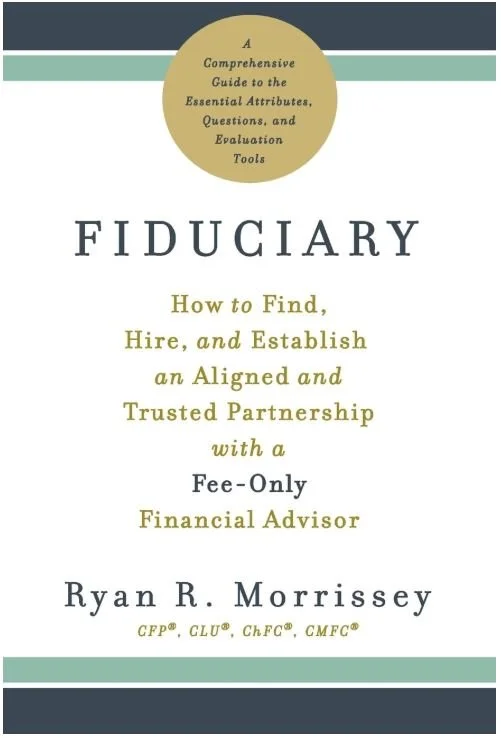
Click here to get your FREE electronic copy of:
Fiduciary - How to Find, Hire, and Establish an Aligned Trusted Partnership with a Fee-Only Financial Advisor
What's Happening With Treasury Yields in 2026?
The 10-year U.S. Treasury yield is commonly used as an important benchmark for interest rates and the broader bond market.
According to the figures discussed in the podcast, the 10-year Treasury began 2026 yielding approximately 4.15% and had risen to approximately 4.66% as of August 19, 2026.
That roughly half-percentage-point increase may not sound dramatic, but rising yields can meaningfully affect bond prices—particularly bonds with longer maturities.
As yields have risen, the prices of many existing bonds and bond funds have come under pressure.
Why Long-Term Bonds Can Fall More When Rates Rise
Not every bond responds to changes in interest rates the same way.
Generally, the longer a bond's duration, the more sensitive its price is to changes in interest rates.
This helps explain why a broad bond-market fund may experience relatively modest fluctuations while a long-term Treasury fund can move much more dramatically.
Consider two examples discussed in the podcast.
Vanguard Total Bond Market ETF (BND)
The Vanguard Total Bond Market ETF, commonly known by its ticker BND, provides broad exposure to the U.S. investment-grade bond market, including Treasury securities, corporate bonds, and mortgage-backed securities.
According to the figures cited in the episode, BND's total return was approximately 0.20% for 2026 through August 19, despite the fund beginning the year with a yield of approximately 4.13%.
Why?
The interest generated by the portfolio helped returns, but falling bond prices offset much of that income.
SPDR Portfolio Long Term Treasury ETF (SPTL)
Long-term bonds have experienced greater price pressure.
SPTL tracks long-term U.S. Treasury securities and therefore has considerably more interest-rate sensitivity than a broad intermediate-term bond portfolio.
According to the episode, SPTL's total return was approximately -3.30% through August 19, 2026, despite beginning the year with a yield of approximately 4.10%.
The difference illustrates an important lesson:
Yield isn't the same thing as total return.
Your total return includes both the income generated by an investment and changes in its market value.
Why Are Interest Rates Rising?
There's rarely one single explanation for movements in the bond market.
Interest rates reflect investor expectations about inflation, economic growth, monetary policy, government borrowing, and supply and demand for debt.
The podcast highlights three factors that may be contributing to pressure on longer-term interest rates.
1. Inflation and Federal Reserve Expectations
Inflation expectations can have a major influence on interest rates.
If investors believe inflation will remain elevated—or that monetary policy may need to remain restrictive—they may demand higher yields for holding longer-term bonds.
That puts downward pressure on existing bond prices.
2. Government Debt and Deficits
The federal government regularly issues Treasury securities to finance its borrowing needs.
When the supply of debt increases, investors may demand more attractive yields to absorb that additional issuance.
Higher yields on newly issued Treasury securities can then put pressure on the prices of existing bonds.
3. Increased Corporate Borrowing
Corporations also compete for investor capital.
Technology companies in particular have substantial capital needs associated with artificial intelligence infrastructure and other investments.
Increased corporate bond issuance can affect supply and demand throughout the fixed-income market.
Ultimately, the bond market is influenced by countless variables—just like the stock market.
And that brings us to the most important question.

Want to see my YouTube Video on This Topic? — Click Here
What Should You Do If Your Bond Funds Are Down?
If you already own intermediate- or long-term bonds, you broadly have three choices:
1. Do nothing.
2. Sell some intermediate- or long-term bonds and move toward shorter-term bonds or cash.
3. Purchase additional intermediate- or long-term bonds.
Which option is appropriate depends on why you own bonds, your time horizon, your income needs, and your tolerance for volatility.
Option 1: Stay Invested
For a long-term investor with a diversified, high-quality bond allocation, doing nothing may be perfectly reasonable.
Interest rates could continue rising, causing additional price declines.
But rates could also decline.
If rates fall, intermediate- and long-term bonds could appreciate.
Trying to predict exactly when rates will peak or bottom can be extremely difficult.
Constantly moving between short- and long-term bonds based on predictions about the Federal Reserve or Treasury yields can turn into another form of market timing.
If your bond allocation still matches your long-term retirement plan, short-term volatility alone may not justify changing it.
Option 2: Move Toward Short-Term Bonds or Cash
Retirees who are particularly sensitive to price fluctuations may prefer shorter-duration investments.
Potential alternatives can include:
Short-term Treasury securities
Treasury bills
Short-term Treasury ETFs
Money market funds
CDs
Shorter-duration bonds are generally less sensitive to changes in interest rates than long-term bonds.
But there's a tradeoff.
If interest rates eventually decline, money market funds, CDs, and short-term securities will need to be reinvested at the lower rates then available.
Longer-term bonds can allow investors to lock in today's yields for a longer period.
Option 3: Buy More Intermediate- or Long-Term Bonds
Rising yields aren't necessarily bad news for someone putting new money to work.
Higher interest rates mean newly purchased bonds can potentially provide more income.
Investors who have held substantial amounts of cash, money market funds, or short-term CDs may therefore consider whether today's bond yields make intermediate-term bonds more attractive.
If rates eventually fall, investors could potentially benefit from both the income their bonds generate and an increase in the market value of those bonds.
But the tradeoff remains the same: if rates rise further, bond prices can continue falling.
This is why your time horizon matters.
Should Retirees Still Own Bonds?
For many retirees, yes.
The fact that bonds can decline doesn't mean they've stopped serving a purpose in a diversified portfolio.
Retirement can easily last 20, 30, or even more years. During that time, investors will experience periods when stocks perform extremely well—and periods when they don't.
One of the primary purposes of bonds is to provide diversification, income, and generally lower volatility than stocks.
Bonds Can Reduce Portfolio Volatility
Stocks generally have greater long-term growth potential, but they also expose investors to substantial short-term losses.
Holding bonds alongside stocks can help reduce the overall volatility of a diversified portfolio.
That's particularly important once you begin taking withdrawals.
Bonds Can Help Protect Your Retirement Income During a Stock Market Decline
One of the biggest risks retirees face is being forced to sell stocks after the market has fallen significantly.
Suppose you need $60,000 from your portfolio to fund your annual retirement expenses.
If the stock market falls 30%, you still need the $60,000.
If all your assets are invested in stocks, you may be forced to sell those stocks after they've declined simply to pay your bills.
That can permanently reduce the number of shares you own and limit your ability to participate in a future recovery.
A diversified bond allocation can provide another potential source of retirement income.
Rather than selling stocks after a major decline, you may be able to draw from bonds or other conservative assets while giving your stock allocation additional time to recover.
This is one reason bonds can remain valuable even when their short-term performance is disappointing.
Bonds Aren't Risk-Free—They're a Different Type of Risk
It's important to avoid thinking about investments as simply "safe" or "risky."
Bonds have risks.
Those can include:
Interest-rate risk: Bond prices can decline when rates rise.
Credit risk: An issuer could fail to make required payments.
Inflation risk: The purchasing power of fixed interest payments can decline over time.
Reinvestment risk: Maturing bonds may eventually need to be reinvested at lower interest rates.
Duration risk: Longer-duration bonds can experience larger price fluctuations when interest rates change.
But stocks have their own risks—and typically experience much larger short-term price fluctuations.
The objective isn't to eliminate investment risk entirely.
It's to decide which risks you're willing and financially able to take to accomplish your retirement goals.
Should You Sell Your Bonds Because They're Down?
Seeing a bond fund decline can be frustrating, especially if you purchased bonds because you expected stability.
But selling solely because an investment has recently declined can turn a temporary price fluctuation into a permanent loss.
Before making a change, ask yourself:
Why did I originally buy these bonds?
Has my retirement time horizon changed?
Do I need this money soon?
Has my tolerance for investment risk changed?
Are these still high-quality bonds?
Is my overall stock-to-bond allocation still appropriate?
Am I reacting to recent performance or following my long-term plan?
If nothing fundamental about your financial plan has changed, recent bond-market volatility may not require you to do anything.

The Bottom Line: Are Bonds Still a Good Investment for Retirement?
Yes, bonds can still be an important part of a well-diversified retirement portfolio.
Rising interest rates have pressured bond prices in 2026, particularly among longer-term bonds. But those same higher rates can also provide investors with more attractive yields than were available during many previous years.
Rather than asking whether bonds are "good" or "bad" right now, consider a more useful question:
What role should bonds play in my retirement portfolio?
For many retirees, bonds aren't intended to outperform stocks.
They're intended to provide income, reduce portfolio volatility, diversify stock-market exposure, and provide a potential source of funds when stocks experience significant declines.
Your appropriate allocation will depend on your retirement income needs, risk tolerance, time horizon, other sources of guaranteed income, and overall financial plan.
Bond markets will continue to fluctuate as interest rates, inflation, economic conditions, and investor expectations change.
That doesn't necessarily mean you should change your strategy every time they do.
For long-term retirement investors, maintaining a diversified portfolio and following a disciplined investment and withdrawal strategy may be far more important than trying to predict where interest rates will go next.
Have a great week—and I’ll talk to you next Tuesday.
Written by Ryan Morrissey CFP®, CLU®, CHFC®, CMFC
Founder & Principal Advisor of Morrissey Wealth Management
Host of the Retire with Ryan Podcast
___________________________________________________________________________________________________________________________
Frequently Asked Questions About Bonds in Retirement
Why do bond prices fall when interest rates rise?
Existing bonds become less attractive when newly issued bonds offer higher yields. As a result, the market price of existing lower-yielding bonds generally falls to make their return more competitive.
Will bond prices go up if interest rates fall?
Generally, yes. Bond prices and interest rates have an inverse relationship, so falling market interest rates typically increase the value of existing fixed-rate bonds. Longer-duration bonds generally experience larger price movements.
Are long-term bonds riskier than short-term bonds?
Long-term bonds generally carry greater interest-rate risk because their prices are more sensitive to changes in rates. However, risk also depends on the issuer's credit quality and other characteristics of the bond.
Should retirees own bonds or CDs?
Both can have a place in a retirement plan. CDs may be appropriate for near-term spending needs and investors seeking predictable principal repayment, while diversified bond investments can provide additional income and potential price appreciation. The appropriate combination depends on your circumstances.
Should I move my bonds into a money market fund?
Moving to a money market fund may reduce short-term price volatility, but it creates reinvestment risk. If interest rates decline, money market yields can fall quickly. Consider your time horizon and overall retirement strategy before making changes based solely on recent bond performance.
What percentage of a retirement portfolio should be in bonds?
There isn't one appropriate percentage for every retiree. Your allocation should consider your age, risk tolerance, spending needs, Social Security and pension income, investment horizon, cash reserves, and ability to withstand stock-market declines.