
Does Medicare Cover Long-Term Care? 4 Ways to Pay for Care
does Medicare cover long-term care, how to pay for long-term care, does Medicare pay for nursing home care, long-term care insurance, hybrid long-term care insurance, traditional long-term care insurance, Medicaid long-term care, self-insure long-term care, long-term care costs in retirement, Medicare nursing home coverage, long-term care planning
One of the most common misconceptions I hear about long-term care is:
“I don't need long-term care insurance because Medicare will pay for my care.”
Unfortunately, that's generally not how Medicare works.
Medicare does not cover most ongoing long-term care or custodial care. Medicare may cover certain medically necessary hospital and skilled care services, but if you eventually need ongoing assistance because you can no longer care for yourself independently, you may need another way to pay for that care.
That's an important distinction because long-term care can become one of the largest expenses you face during retirement.
So, if Medicare isn't designed to cover years of long-term care, how will you pay for it?
Generally, there are four strategies worth considering:
Medicaid
Self-insuring
Hybrid long-term care insurance
Traditional long-term care insurance
The best solution will depend on your assets, income, health, marital status, age, and how much of the financial risk you're willing to retain yourself.
Let's look at how Medicare works first, and then compare these four approaches to paying for long-term care.

Does Medicare Cover Long-Term Care?
Generally, no. Medicare does not cover ongoing custodial long-term care.
Original Medicare consists primarily of Medicare Part A and Part B.
Medicare Part A can help cover qualifying inpatient hospital care and certain skilled nursing facility care, while Medicare Part B generally helps cover physician services, outpatient care, preventive services, and other medically necessary services.
The important distinction is between skilled medical care and ongoing custodial care.
For example, suppose you fall and break your hip.
You go to the hospital and eventually require rehabilitation. Medicare may cover qualifying medical and skilled care associated with your recovery, subject to Medicare's requirements, deductibles, coinsurance, and coverage limitations.
But imagine that your hip has healed enough that you no longer require skilled medical treatment, yet you still can't independently bathe, dress, use the bathroom, or safely move around your home.
You may still need substantial assistance.
But that assistance can fall into the category of long-term custodial care rather than Medicare-covered skilled care.
At that point, you need another way to pay for it.
That's why relying on Medicare as your long-term care plan can leave a significant hole in your retirement strategy.
How Much Does Long-Term Care Cost?
Before deciding how you'll pay for long-term care, it's important to understand the potential size of the expense.
Costs can vary dramatically depending on where you live, the type of care required, and how long you need assistance.
Using the Connecticut figures discussed in the podcast, average costs were approximately:
$15,208 per month for full-time nursing care
$182,000 per year for full-time nursing care
$82,000 per year for home care
$110,000 per year for assisted living
And these are averages. Costs can vary significantly even within the same state.
The podcast also discusses an average care period of approximately three years. That doesn't necessarily mean spending all three years in a nursing home. Someone could spend a year receiving care at home followed by two years in a facility, for example.
For a married couple, the financial consequences can become particularly concerning.
If one spouse requires expensive long-term care for several years, the couple still needs enough money to maintain the healthy spouse's lifestyle.
This is why long-term care planning isn't simply about answering:
“Can I afford nursing home care?”
A better question is:
“Can I afford long-term care without jeopardizing my spouse's retirement or the other financial goals that are important to us?”
Let's look at four potential ways to address that risk.

Option 1: Medicaid
One potential way to pay for long-term care is Medicaid.
Medicare and Medicaid are often confused, but they're very different programs.
Medicaid is a needs-based program. To qualify for long-term care assistance, applicants generally need to satisfy financial and medical eligibility requirements.
That means your income and assets can affect whether you qualify.
Medicaid Income and Asset Limits
Medicaid eligibility rules can vary by state and individual circumstances.
As discussed in the podcast, applicants may face strict limits on the amount of income and countable assets they're permitted to have.
For some individuals whose income exceeds the applicable limit, certain states may permit planning strategies such as a Qualified Income Trust, sometimes called a Miller Trust, to address excess income.
Asset rules can be even more restrictive.
For a single individual, qualifying for Medicaid may require spending down a substantial portion of their countable assets before Medicaid begins paying for long-term care.
That could potentially include retirement accounts, investments, bank accounts, and other assets depending on the applicable state rules.
For married couples, however, additional protections may apply to the spouse who isn't receiving long-term care.
This spouse is commonly referred to as the community spouse.
What Is a Community Spouse?
A community spouse is generally the spouse who remains living in the community while the other spouse receives institutional long-term care.
Under Medicaid's spousal impoverishment rules, the community spouse may be permitted to retain certain assets and income rather than being required to spend virtually everything before the spouse receiving care can qualify.
The exact amount depends on the applicable rules.
The podcast uses Connecticut as an example and discusses the ability of a community spouse to retain the home, a vehicle, and a larger amount of assets than would typically be available to a single Medicaid applicant.
For married couples, these rules can become extremely important because the spouse remaining at home still needs sufficient resources to pay for housing, food, transportation, healthcare, and everyday living expenses.
Be Careful About Giving Assets Away to Qualify for Medicaid
You may have heard that you can simply give your assets to your children before entering a nursing home and then qualify for Medicaid.
It's not that simple.
The podcast discusses the five-year Medicaid look-back period, under which certain transfers made before applying for Medicaid can affect eligibility.
This means last-minute gifting isn't necessarily an effective strategy.
Some families incorporate irrevocable trusts and other estate-planning techniques into a long-term Medicaid planning strategy. These strategies can be complicated and should generally be coordinated with a qualified elder-law attorney well before care is required.
Medicaid can ultimately provide an important safety net, but retirees with meaningful assets may prefer not to make Medicaid their primary long-term care strategy.
That brings us to option two.
Option 2: Self-Insuring for Long-Term Care
The second option is self-insuring, or paying long-term care expenses from your own assets.
For retirees with sufficient wealth, this can be a perfectly reasonable strategy.
Instead of paying insurance premiums, you retain the financial risk yourself and plan to use your:
Retirement accounts
Taxable investment accounts
Cash
Pension or Social Security income
Home equity
Other assets
to pay for care if it's eventually needed.
The advantage is straightforward.
If you never need substantial long-term care, you haven't spent years paying premiums for coverage you didn't use.
But self-insuring also means you accept the full financial risk if you do require expensive care.
How Much Money Do You Need to Self-Insure Long-Term Care?
There isn't one portfolio value at which someone automatically becomes capable of self-insuring.
The answer depends on much more than your net worth.
Suppose you have a $2 million retirement portfolio.
That may sound like more than enough to self-insure.
But what if you're married and both spouses could potentially live another 25 years? What if you're already withdrawing $100,000 per year from the portfolio? What if one spouse requires several years of nursing care costing well into six figures annually?
Suddenly, that $2 million portfolio may not feel nearly as large.
This is why self-insuring should ideally be modeled within your retirement plan rather than chosen based solely on your account balance.
Run a scenario assuming one spouse requires several years of care.
Then run another scenario in which both spouses require care at different points in retirement.
Ask:
Does our retirement plan still work?
If the answer is yes, self-insuring may be a viable strategy.
If the answer is no, transferring at least part of that risk to an insurance company may be worth considering.
Can You Use Your Home to Pay for Long-Term Care?
Potentially.
Home equity can become another resource for funding care.
As discussed in the podcast, someone moving permanently into a long-term care facility might ultimately sell their home and use the proceeds toward care.
Someone receiving care at home could potentially consider other ways of accessing home equity, such as a reverse mortgage or home equity line of credit, depending on their circumstances.
Your home shouldn't automatically be viewed as your long-term care plan, but it can be one component of a broader self-funding strategy.
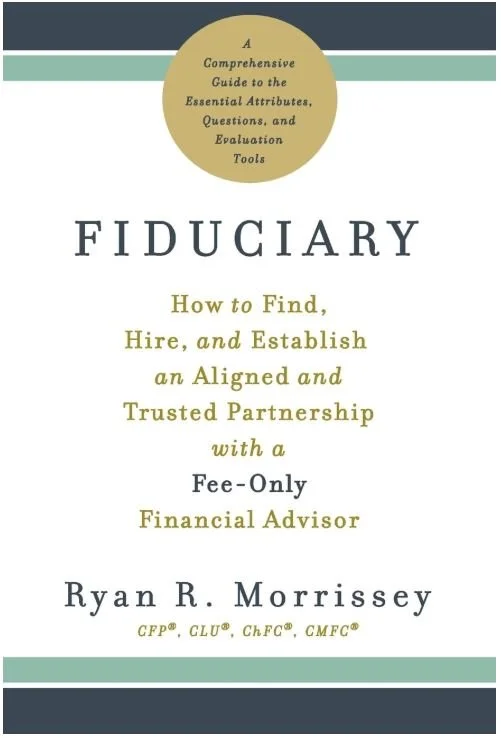
Click here to get your FREE electronic copy of:
Fiduciary - How to Find, Hire, and Establish an Aligned Trusted Partnership with a Fee-Only Financial Advisor
Option 3: Hybrid Long-Term Care Insurance
The third option is hybrid long-term care insurance.
Hybrid policies generally combine long-term care benefits with life insurance.
One of the biggest objections people have to traditional long-term care insurance is:
“What if I pay premiums for 20 years and never use the policy?”
Hybrid policies are designed, in part, to address that concern.
If you eventually need qualifying long-term care, the policy can provide long-term care benefits.
If you never need care, a death benefit may ultimately be paid to your beneficiaries, subject to the policy's terms and any benefits previously used.
In other words, the policy is designed to provide value through either long-term care benefits or a life insurance death benefit.
What Does Hybrid Long-Term Care Insurance Cover?
Depending on the policy, hybrid coverage may provide benefits for:
Home care
Assisted living
Skilled nursing care
Other qualifying long-term care services
The amount of coverage depends on the policy you purchase.
For example, you might purchase a policy providing $5,000 or $6,000 per month of long-term care benefits.
You don't necessarily need enough insurance to cover 100% of your potential long-term care expenses.
Instead, you can calculate your expected income from sources such as Social Security, pensions, and your investment portfolio and then insure the remaining gap.
For example, if you anticipate needing $12,000 per month of care but expect $6,000 of monthly retirement income that could be directed toward those expenses, you may decide you only need insurance covering the remaining $6,000.
This can make coverage more affordable while still protecting a meaningful portion of your retirement assets.
What Triggers Long-Term Care Insurance Benefits?
Long-term care benefits generally don't begin simply because you decide you'd like assistance.
You need to satisfy the policy's benefit triggers.
As discussed in the podcast, benefits may become available when you're diagnosed with a qualifying cognitive impairment or require assistance with at least two of the six Activities of Daily Living (ADLs).
Those six activities generally include:
Bathing
Dressing
Eating
Toileting
Continence
Transferring
A medical professional generally needs to certify that the applicable requirements have been satisfied.
Don't Forget About Inflation Protection
A long-term care policy you purchase at age 55 or 60 may not be used for another 20 or 30 years.
That makes inflation extremely important.
The podcast discusses long-term care expenses increasing substantially over time and recommends considering an inflation rider, such as 3% or potentially 5%, depending on the policy and your circumstances.
Suppose you purchase $6,000 per month of coverage today.
Without inflation protection, that $6,000 benefit remains $6,000 even if the cost of care has increased dramatically by the time you're 85.
Inflation protection can allow the benefit to increase over time and maintain more of its purchasing power.
How Do You Pay for a Hybrid Long-Term Care Policy?
Hybrid policies can offer different premium structures.
Depending on the policy, you may be able to:
Pay a single lump-sum premium
Pay premiums over 10 years
Pay premiums over 20 years
Use another predetermined premium schedule
One potential advantage is that certain hybrid policies can provide more predictability around the premium commitment.
For someone who doesn't like the possibility of paying premiums for decades or facing future premium increases, this can be attractive.
However, hybrid policies can require a substantial upfront financial commitment.
That means you should also consider the opportunity cost of moving a large amount of money from your investment portfolio into an insurance policy.
Indemnity vs. Reimbursement Long-Term Care Benefits
Another feature to understand is how the insurance company pays your benefit.
Some hybrid policies use an indemnity, or cash, benefit structure.
Under this type of policy, once you qualify for benefits, the insurer can pay the predetermined monthly benefit directly to you, subject to the policy terms.
For example, if your monthly benefit is $5,000, you may receive $5,000 and have greater flexibility over how the money is used.
That could potentially include paying a family member for assistance or making modifications to your home.
Other policies operate using a reimbursement model.
With reimbursement coverage, you generally incur qualifying long-term care expenses and then submit those expenses for reimbursement, subject to the policy's requirements and limits.
Understanding this distinction is important when comparing policies because it can significantly affect how flexible your coverage will be if you eventually need care.
Option 4: Traditional Long-Term Care Insurance
The fourth option is traditional long-term care insurance.
Traditional policies are specifically designed to provide long-term care benefits.
Unlike a hybrid policy, they generally don't include the same life insurance death benefit if you never need care.
That may sound like a disadvantage—and for some people it is.
But there's another side to the equation.
Because the insurance company doesn't necessarily have to pay a death benefit if you never use the policy, traditional long-term care insurance may provide more long-term care coverage per dollar of premium than a comparable hybrid policy.
That's the fundamental tradeoff.
Hybrid Policy
You may receive value through either long-term care benefits or a death benefit, but you may pay more for a comparable amount of long-term care coverage.
Traditional Policy
You may receive greater long-term care coverage for the premiums paid, but if you never require care, you could pay premiums for years without receiving benefits.
Neither is automatically better.
The appropriate choice depends on what you're trying to accomplish.
Hybrid vs. Traditional Long-Term Care Insurance
Here's a simple way to think about the differences.
FeatureHybrid LTC InsuranceTraditional LTC InsuranceLong-term care benefitsYesYesPotential death benefitGenerally yesGenerally noPremium structureMay offer lump-sum or limited-pay optionsTypically ongoing premiumsPremium predictabilityCan offer greater predictability depending on policyPremiums may increaseBenefit per premium dollarMay be lowerMay be higherConcern about “use it or lose it”Reduced by potential death benefitGreaterMedical underwritingYesYesInflation protectionMay be availableMay be available
The right choice depends on whether your priority is maximizing long-term care coverage or obtaining coverage while preserving a potential benefit if care is never needed.
Can Traditional Long-Term Care Insurance Premiums Increase?
Yes, and this is an important risk to understand before purchasing a traditional policy.
As discussed in the podcast, traditional long-term care premiums aren't necessarily guaranteed to remain unchanged.
Insurance companies can seek approval from state insurance regulators for premium increases based on factors such as claims experience and the economics of the policies they've issued.
That doesn't mean your premium will increase by a specific amount every year.
But you should understand that future increases are possible.
This creates an important planning consideration:
Don't purchase a policy that only works within your budget if the premium never changes.
You should have enough flexibility in your retirement plan to absorb potential increases without being forced to surrender a policy after paying into it for many years.

Prefer to watch my YouTube video on is topic?…Click Here
How Much Does Long-Term Care Insurance Cost?
There isn't one standard price.
Your premium can depend on factors such as:
Age
Sex
Health
Marital status
Monthly benefit
Benefit period
Inflation protection
Policy type
Elimination period
Insurance company
The transcript provides an example involving a 65-year-old couple seeking approximately $5,800 per month each of long-term care coverage for three years with a 3% inflation rider.
For the hybrid policy discussed, the couple could pay approximately $24,000 annually for 10 years or a $193,000 lump sum.
The traditional long-term care quote was approximately $3,700 annually for the husband and $6,200 for the wife, or roughly $9,800 combined, before considering any future premium increases.
The purpose of this example isn't to suggest these are the rates you should expect. Insurance pricing is highly individualized.
Instead, it demonstrates the tradeoff between the two types of coverage.
Hybrid coverage may require substantially more money upfront but can provide a potential death benefit and greater premium certainty.
Traditional insurance can require a smaller initial premium while potentially providing significant long-term care benefits, but premiums may continue for many years and could increase.
When Should You Buy Long-Term Care Insurance?
If you're considering insurance, waiting too long can create a problem.
Long-term care insurance requires medical underwriting.
The insurance company will review your health history before deciding whether to issue coverage and at what price.
As discussed in the podcast, denial rates can increase substantially as applicants get older. The transcript cites an approximate 47% denial rate among applicants age 70 and older, compared with approximately 12% among applicants ages 40 to 48.
Certain medical conditions can also make qualifying difficult or impossible.
That's why you generally don't want to wait until you begin needing assistance to start thinking about long-term care insurance.
By then, insurance may no longer be available.
The decision should ideally be evaluated while you're still healthy enough to have multiple options.
Should You Buy Long-Term Care Insurance?
Not everyone needs to purchase long-term care insurance.
At one end of the spectrum, someone with relatively few assets may ultimately rely more heavily on Medicaid.
At the other end, someone with substantial wealth may comfortably self-insure without threatening their retirement security.
It's often the retirees between those two extremes who may find insurance particularly valuable.
You may have accumulated enough assets to fund a comfortable retirement but not enough that spending several hundred thousand dollars on care would be inconsequential.
Insurance can allow you to transfer some of that financial risk to an insurance company.
The objective doesn't necessarily need to be insuring every dollar of potential long-term care costs.
Instead, you might decide to:
Self-insure part of the risk + insure the portion that could meaningfully jeopardize your retirement plan.
For many families, that can provide a reasonable middle ground.
Long-Term Care Planning Is Especially Important for Married Couples
Long-term care can create financial challenges for anyone, but married couples have an additional concern:
What happens to the healthy spouse?
Suppose one spouse develops dementia and requires several years of expensive care.
If the couple spends a substantial portion of their retirement savings paying for that care, the surviving or healthy spouse may still need those assets to support themselves for another 10, 15, or 20 years.
This is why long-term care planning shouldn't focus exclusively on whether you can afford care.
You should also ask:
“If I need care, will my spouse still have enough money to maintain their lifestyle?”
The transcript emphasizes this distinction, noting that self-funding can be more challenging for married couples because the spouse not receiving care still needs income and assets to support their own lifestyle.
Which Long-Term Care Strategy Is Best?
There isn't one strategy that's appropriate for everyone.
Think of the four options this way:
Medicaid may provide a safety net for individuals who satisfy applicable financial and medical eligibility requirements.
Self-insuring may make sense if your assets and retirement income are sufficient to absorb substantial care expenses without jeopardizing your other financial goals.
Hybrid long-term care insurance may appeal to someone who wants long-term care protection but also values having a potential death benefit if care is never needed.
Traditional long-term care insurance may appeal to someone primarily focused on obtaining a larger amount of long-term care protection for their premium dollars and who is comfortable accepting the possibility that they may never use the policy.
You can also combine strategies.
For example, you may purchase enough insurance to cover a portion of your anticipated care expenses and plan to self-insure the remainder.
The important thing is to make the decision before you need care.
The Bottom Line: Don't Rely on Medicare as Your Long-Term Care Plan
So, does Medicare cover long-term care?
Generally, Medicare does not cover the ongoing custodial care that many retirees may eventually need.
That's why long-term care deserves its own place within your retirement plan.
The transcript notes that approximately 70% of people who live to age 65 will need some type of long-term care, although that doesn't necessarily mean everyone will spend years in a nursing facility. Some people may simply need assistance at home with everyday activities.
The question isn't simply whether you'll need care.
It's:
If you need it, how will you pay for it?
Will you rely on Medicaid?
Will you self-insure?
Will you purchase traditional long-term care insurance?
Would a hybrid policy better fit your goals?
Or would some combination of these strategies provide the best balance?
There's no universal answer.
But ignoring the issue and assuming Medicare will pay for everything can expose your retirement portfolio—and potentially your spouse's financial security—to a substantial expense you never planned for.
Before making a decision, estimate the cost of care where you live, determine how much your existing retirement income could cover, model the effect of several years of care on your portfolio, and then decide how much of the remaining risk you're comfortable retaining.
Long-term care planning isn't necessarily about buying insurance.
It's about having a plan for how you'll pay for care if you eventually need it.
Have a great week—and I’ll talk to you next Tuesday.
Written by Ryan Morrissey CFP®, CLU®, CHFC®, CMFC
Founder & Principal Advisor of Morrissey Wealth Management
Host of the Retire with Ryan Podcast
_________________________________________________________________________________________________________________________
Frequently Asked Questions About Long-Term Care
Does Medicare pay for nursing home care?
Medicare may cover certain qualifying skilled nursing facility care for a limited period when Medicare's requirements are satisfied. However, Medicare generally doesn't cover ongoing custodial long-term care simply because you can no longer live independently.
Does Medicare cover assisted living?
Medicare generally doesn't pay for the room-and-board or ongoing custodial costs associated with living in an assisted living facility. Medicare may continue covering qualifying medical services you receive while living there.
Does Medicare cover long-term care at home?
Medicare can cover certain qualifying home health services, but it isn't designed to provide unlimited ongoing custodial care at home. Someone requiring long-term assistance with everyday activities may need another way to pay for that care.
Does Medicaid cover long-term care?
Medicaid can provide long-term care coverage for eligible individuals who satisfy applicable medical, income, and asset requirements. Eligibility and coverage rules can vary by state.
What are the four ways to pay for long-term care?
The four strategies discussed in this article are Medicaid, self-insuring, hybrid long-term care insurance, and traditional long-term care insurance. Some retirees may use a combination of these approaches.
Is hybrid long-term care insurance better than traditional long-term care insurance?
Neither is universally better. Hybrid policies can provide a death benefit if long-term care isn't needed, while traditional policies may provide greater long-term care benefits per premium dollar. Your health, assets, goals, cash flow, and desired coverage should all be considered.
At what age should I consider long-term care insurance?
There isn't one perfect age. However, because long-term care insurance requires medical underwriting, waiting until health problems develop can make coverage more expensive or unavailable. If insurance is part of your strategy, it can be beneficial to evaluate your options while you're still healthy.
How much long-term care insurance do I need?
You don't necessarily need to insure 100% of your potential expenses. Consider how much Social Security, pension income, portfolio withdrawals, and other resources could contribute toward care and then determine whether insurance should cover some or all of the remaining gap.
Can I give my assets away and qualify for Medicaid?
Medicaid has rules governing transfers of assets, including a look-back period discussed in the transcript. Giving assets away shortly before applying can therefore affect eligibility. Medicaid planning should generally be coordinated well in advance with a qualified elder-law attorney.