How To Manage The Impact From the IRAN War On Your Retirement Portfolio
It’s been an interesting month in the stock market, to say the least, following the start of the Iran War, which began on February 28, 2026.
Since the start of the conflict, the S&P 500 has declined roughly 6%, largely due to the sharp increase in oil prices. Rising oil prices can impact nearly every part of the global economy because oil affects transportation, manufacturing, shipping, and production costs for countless goods and services.
In this article, we’ll discuss:
Why the market declined
How oil prices impact the stock market
Why market declines are normal
Five strategies to handle market volatility in retirement portfolios
Why the Stock Market Dropped: Oil Prices and War
Since the start of the conflict, crude oil prices climbed from about $67 per barrel to as high as $100 per barrel, before settling around $90 per barrel.
That represents:
About a 33% increase from just before the conflict
About a 50% increase compared to oil prices over the previous six months
Sudden increases in oil prices can hurt corporate profits because companies must spend more on:
Transportation
Manufacturing
Shipping
Energy
Raw materials
The stock market is always forward-looking. If investors believe future corporate earnings will decline, stock prices typically fall. That’s largely what we’ve seen during this recent decline.
However, it’s important to understand that a 6% market decline is not unusual. Market pullbacks like this happen regularly.

Market Declines Are Normal
Historically, the S&P 500 declines about 15% intra-year on average, meaning that during a typical year, the market will drop at some point before recovering.
If you want to achieve the historical average stock market return of roughly 10–11% per year, you must be willing to accept volatility.
There is no way to get stock market returns without stock market risk.
For retirees or pre-retirees with portfolios that are:
50–70% stocks
30–50% bonds
You should still expect portfolio volatility of roughly 10–12% per year on average.
This is completely normal.
5 Smart Ways to Handle Market Volatility
When markets decline, many investors panic and sell investments. In most cases, that is the worst thing you can do.
Instead, here are five strategies to consider.
1. Consider Buying the Dip
This may sound counterintuitive, but market declines often create opportunities.
If you have:
Cash in the bank
Money market funds
Low-yield investments
Money waiting to invest
IRA contributions to make
Roth IRA contributions
529 contributions
Market declines can be a good time to invest because you are buying investments at lower prices.
If markets recover, those purchases may perform very well long term.
2. Rebalance Your Portfolio
Every investor should have a target asset allocation, such as:
60% stocks / 40% bonds
70% stocks / 30% bonds
50% stocks / 50% bonds
If markets move significantly, your allocation may drift away from your target.
For example:
If stocks went up a lot last year, you might now be 70% stocks instead of 60%.
If stocks recently dropped, you might now be 50% stocks instead of 60%.
Rebalancing means:
Selling what has gone up
Buying what has gone down
Returning to your target allocation
This forces you to buy low and sell high automatically.
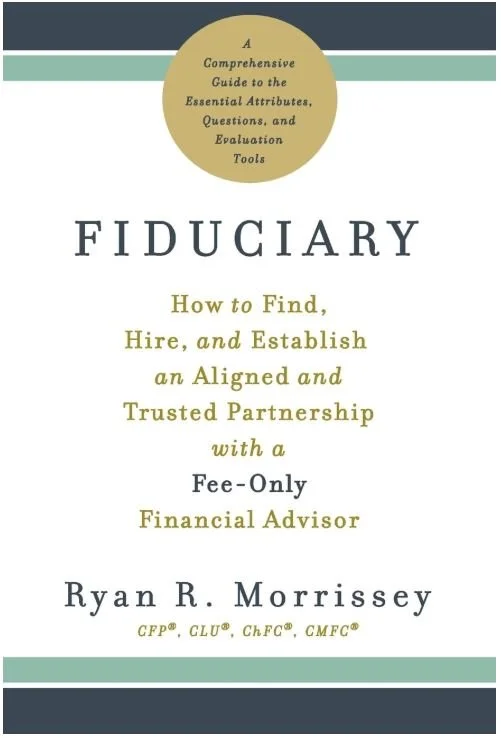
Click here to get your FREE electronic copy of:
Fiduciary - How to Find, Hire, and Establish an Aligned Trusted Partnership with a Fee-Only Financial Advisor
3. Continue Automated Investing (Dollar Cost Averaging)
If you are still working and contributing to:
401(k)
Roth IRA
HSA
IRA
You should not stop investing when markets decline.
This strategy is called dollar cost averaging.
When markets fall:
Your contributions buy more shares
You invest at lower prices
Long-term returns often improve
Ideally, markets would stay low while you are working and investing, and then rise later when you retire.
4. Sell Underperforming Investments
Market downturns can be a good time to review your portfolio and identify:
Underperforming stocks
Poor mutual funds
Speculative investments
High-fee funds
Investments that no longer fit your strategy
If an investment has underperformed for years and there is no clear reason it will recover, it may be time to sell and move into:
Index funds
Diversified ETFs
Lower-cost investments
More consistent investments

Prefer to listen to my podcast episode on this topic? Click here
5. Consider Tax-Loss Harvesting
If you own investments in a taxable brokerage account and they are currently at a loss, you may be able to sell them and create a tax deduction.
Example:
You bought a fund for $20,000
It is now worth $16,000
You sell it and create a $4,000 capital loss
You can:
Deduct up to $3,000 per year against income
Use losses to offset capital gains
Carry forward unused losses to future years
Important: Wash Sale Rule
If you sell an investment for a loss:
You cannot buy the same investment for 30 days
Or the tax loss is disallowed
However, you can buy a similar investment, such as:
Sell S&P 500 fund → Buy Total Market fund
Sell Apple → Buy Nvidia
Sell Coca-Cola → Buy Pepsi
This allows you to stay invested while still capturing the tax loss.
Will the Market Recover?
No one can predict the future, but historically:
Wars
Oil shocks
Tariffs
Political events
Recessions
Pandemics
Interest rate increases
Have all caused temporary market declines, and markets have historically recovered over time.
Often, geopolitical events cause short-term market volatility, not long-term market declines.
Large spikes in oil prices historically do not stay elevated forever, as higher prices typically increase supply and reduce demand over time.
Final Thoughts: Don’t Overreact to Market Declines
Market volatility is normal. It is part of investing.
If you want long-term growth and returns that outpace inflation, you must accept that markets will:
Rise
Fall
Correct
Recover
Repeat
Instead of panicking during market declines, consider:
Buying the dip
Rebalancing your portfolio
Continuing automatic investments
Selling underperformers
Tax-loss harvesting
Successful investors are not the ones who avoid volatility — they are the ones who plan for it and stay disciplined during it.

Key Takeaways
Market declines happen every year.
Oil price spikes can temporarily hurt markets.
The S&P 500 averages a 15% decline at some point each year.
Volatility is required to achieve higher returns.
Market downturns can create investment and tax opportunities.
Long-term investors should avoid emotional decisions.
Have a great week—and I’ll talk to you next Tuesday.
Written by Ryan Morrissey CFP®, CLU®, CHFC®, CMFC
Founder & Principal Advisor of Morrissey Wealth Management
Host of the Retire with Ryan Podcast