
How to Make Your Brokerage Account Work Like a Roth IRA (Pay 0% Capital gains Tax)
Roth IRAs have become one of the most popular retirement planning tools available today. Financial advisors, YouTubers, and retirement experts frequently discuss the benefits of Roth contributions and Roth conversions, and for good reason. The ability to grow investments tax-free and take tax-free withdrawals in retirement can be extremely valuable.
However, many investors overlook another powerful planning tool: the taxable brokerage account.
While taxable brokerage accounts don't receive the same attention as Roth IRAs, they offer unique tax advantages that can make them an excellent complement to your retirement strategy. In some cases, careful planning may even allow you to pay 0% federal capital gains tax on investments held in a taxable brokerage account.
In this article, we'll explore how taxable brokerage accounts work, how they compare to Roth IRAs, and how retirees can potentially generate tax-free investment income using long-term capital gain rules.

What Is a Roth IRA?
A Roth IRA is an individual retirement account funded with after-tax dollars. Since you've already paid income taxes on the money contributed, qualified withdrawals are generally tax-free.
Inside a Roth IRA, investments can include:
Stocks
Exchange-traded funds (ETFs)
Mutual funds
Bonds
CDs
Other approved investments
The primary benefits of a Roth IRA include:
Tax-Free Growth
Investment gains compound without annual taxation.
Tax-Free Withdrawals
Qualified distributions are generally tax-free if:
You're at least age 59½, and
The account has been open for at least five years.
No Required Minimum Distributions (RMDs)
Unlike traditional IRAs, Roth IRAs do not require distributions during the owner's lifetime.
These advantages have made Roth accounts increasingly popular among investors concerned about future tax rates.
Limitations of Roth IRAs
While Roth IRAs are excellent planning tools, they aren't perfect.
Some limitations include:
Withdrawal Restrictions
Accessing investment gains before age 59½ may trigger taxes and penalties.
Contribution Limits
Annual contributions are limited and may be phased out at higher income levels.
No Tax-Loss Harvesting
Losses inside a Roth IRA cannot be used to offset taxable gains elsewhere.
Inherited Roth IRA Rules
Most non-spouse beneficiaries must empty inherited Roth IRAs within 10 years under current rules.
These limitations are one reason taxable brokerage accounts remain an important part of a comprehensive retirement strategy.
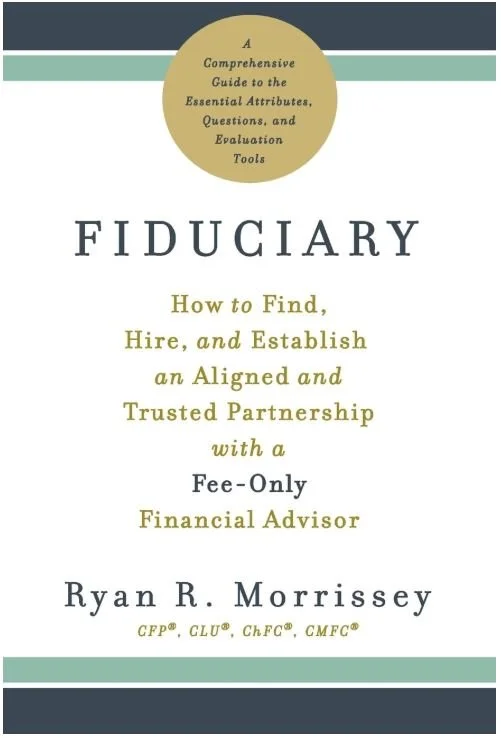
Click here to get your FREE electronic copy of:
Fiduciary - How to Find, Hire, and Establish an Aligned Trusted Partnership with a Fee-Only Financial Advisor
What Is a Taxable Brokerage Account?
A taxable brokerage account is simply an investment account that is not considered a retirement account.
These accounts can be opened at firms such as:
Charles Schwab
Fidelity Investments
Vanguard
Unlike retirement accounts, taxable brokerage accounts have:
No contribution limits
No income restrictions
No early withdrawal penalties
Complete access to your money at any time
However, they do come with annual tax consequences.
How Are Taxable Brokerage Accounts Taxed?
Investors generally pay taxes on three types of income:
1. Interest Income
Interest earned from bonds, CDs, or cash balances is generally taxed as ordinary income.
2. Dividend Income
Qualified dividends typically receive favorable long-term capital gains tax treatment.
3. Capital Gains
When investments are sold for a profit, gains are taxed as either:
Short-Term Capital Gains
Investments held one year or less.
Taxed at ordinary income rates.
Long-Term Capital Gains
Investments held more than one year.
Eligible for preferential tax rates, including the possibility of paying 0% federal capital gains tax.

Prefer to listen to my podcast on this topic? Click here
How to Make a Taxable Brokerage Account Behave More Like a Roth IRA
One of the biggest misconceptions about taxable brokerage accounts is that investors must pay taxes every year.
In reality, much depends on the investments selected.
Growth Stocks
Consider a stock that pays no dividend.
If the stock appreciates but isn't sold:
No capital gain is realized.
No tax is due.
The gain continues to compound until the shares are sold.
This creates a form of tax deferral similar to a retirement account.
Why ETFs Often Work Better Than Mutual Funds
For many investors, ETFs are more tax-efficient than traditional mutual funds.
Many ETFs:
Generate little or no annual capital gains distributions.
Have lower turnover.
Offer broad diversification.
Examples include:
SPY - State Street SPDR S&P 500 ETF Trust
VTI - Vanguard Total Stock Market Index Fund ETF
VOO -Vanguard S&P 500 ETF
Traditional mutual funds often distribute capital gains annually, creating taxable events even if you don't sell your shares.
For taxable brokerage accounts, minimizing annual taxable distributions can significantly improve long-term results.
The 0% Capital Gains Tax Strategy
This is where taxable brokerage accounts become especially attractive for retirees.
Under current federal tax law, long-term capital gains can be taxed at 0% if your taxable income remains below certain thresholds.
2026 Long-Term Capital Gains Thresholds
Single Filers
0% long-term capital gains rate applies up to:
$49,450 of taxable income
Married Filing Jointly
0% long-term capital gains rate applies up to:
$100,800 of taxable income
These thresholds are based on taxable income after deductions.
The Impact of the Standard Deduction
For 2026, the standard deduction is:
Single
$16,100
Married Filing Jointly
$32,200
This means retirees may realize even larger capital gains while remaining within the 0% federal capital gains bracket.
Example: Single Retiree
Assume:
Age 62
No other income
Long-term capital gain: $65,000
Calculation:
$65,000 gain − $16,100 standard deduction
Taxable income:
$48,900
Because taxable income remains below the 0% capital gains threshold, the investor would owe:
$0 federal capital gains tax
on the entire gain.
Example: Married Couple
Assume:
Married filing jointly
No other income
Long-term capital gain: $131,000
Calculation:
$131,000 gain − $32,200 standard deduction
Taxable income:
$98,800
Result:
$0 federal capital gains tax
on the entire gain.
What Can Reduce Your 0% Capital Gains Opportunity?
Other sources of income consume space within the lower tax brackets.
Examples include:
Social Security benefits
Pension income
Traditional IRA distributions
401(k) withdrawals
Employment income
Interest income
The more ordinary income you have, the less room remains for capital gains to qualify for the 0% rate.
Another Major Advantage: The Step-Up in Basis
Unlike retirement accounts, taxable brokerage accounts receive a valuable estate planning benefit.
When the owner dies, heirs generally receive a step-up in basis.
This means:
The cost basis resets to the market value on the date of death.
Previously unrealized gains may disappear for tax purposes.
For families looking to transfer wealth efficiently, this can be a significant advantage over many retirement accounts.
Taxable Brokerage Accounts vs. Roth IRAs
FeatureRoth IRATaxable Brokerage AccountTax-free qualified withdrawalsYesNoContribution limitsYesNoIncome restrictionsYesNoEarly withdrawal penaltiesPossibleNoneTax-loss harvestingNoYesStep-up in basis at deathNoYesAbility to borrow against accountNoOften Yes0% capital gains opportunitiesN/AYes

Final Thoughts
Roth IRAs deserve their reputation as powerful retirement planning tools. However, taxable brokerage accounts are often overlooked despite offering significant tax advantages.
With proper planning, investors may be able to:
Minimize annual taxation.
Benefit from long-term capital gains treatment.
Realize gains at a 0% federal tax rate.
Harvest losses when appropriate.
Take advantage of step-up in basis rules for heirs.
For many retirees, the most tax-efficient retirement strategy isn't choosing between a Roth IRA and a taxable brokerage account—it's understanding how to use both effectively.
By coordinating withdrawals from retirement accounts, Social Security benefits, and taxable investments, you may be able to substantially reduce your lifetime tax burden while preserving greater flexibility in retirement.
Have a great week—and I’ll talk to you next Tuesday.
Written by Ryan Morrissey CFP®, CLU®, CHFC®, CMFC
Founder & Principal Advisor of Morrissey Wealth Management
Host of the Retire with Ryan Podcast