
How to Avoid IRS Underpayment Penalties in Retirement (2026 Tax Guide)
With the April 15 tax deadline fast approaching, many taxpayers are wrapping up their 2025 filings — while others are filing for extensions.
But there’s a growing issue that’s catching more people off guard each year: IRS underpayment penalties.
According to a recent Wall Street Journal report, these penalties are rising sharply — especially among higher-income earners and retirees. If you were surprised by a penalty this year, now is the time to make sure it doesn’t happen again in 2027.
Let’s walk through what’s happening, why it matters, and how to avoid it.

Why IRS Underpayment Penalties Are Increasing
Recent data shows a significant jump in penalties:
Taxpayers earning $200,000–$500,000 paid about $1.3 billion in penalties in 2024
That’s 3x higher than in 2021
The number of affected filers rose 30% to nearly 3 million people
What’s Driving This Trend?
Two primary factors:
1. Higher Interest Rates
Underpayment penalties are tied to interest rates.
Around 3% in 2021
Increased to 7% in 2025
Dropping slightly to 6% in April 2026
Higher rates = higher penalties.
2. More Complex Income Streams
Historically, this mainly affected self-employed individuals.
Today, it increasingly impacts:
Retirees
Investors
High-income earners with variable income
What Is an Underpayment Penalty?
The IRS requires you to pay taxes as you earn income, not just when you file your return.
If you don’t:
Pay enough throughout the year, or
Pay on time
You may owe an underpayment penalty — essentially interest charged on unpaid taxes.
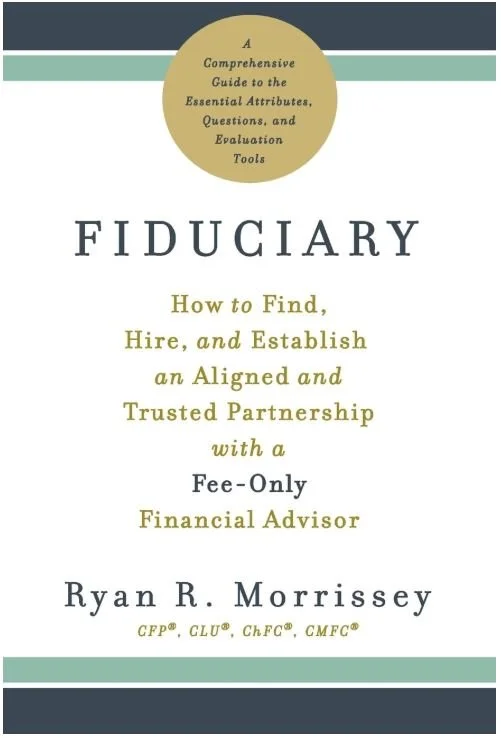
Click here to get your FREE electronic copy of:
Fiduciary - How to Find, Hire, and Establish an Aligned Trusted Partnership with a Fee-Only Financial Advisor
Who Is Most at Risk?
You may be at higher risk if you have income without automatic withholding, such as:
Retirement account distributions
Roth conversion income
Social Security benefits
Dividends and interest
Capital gains from investments
Self-employment income
Example
If you:
Sell a fund in January with a $20,000 capital gain
Wait until the following April to pay taxes
You could owe penalties for each quarter that tax went unpaid.
Key IRS Safe Harbor Rules
To avoid penalties, you generally need to meet one of these thresholds:
Rule #1: Pay 90% of Current-Year Taxes
Pay at least 90% of what you owe for the current year
Payments can be through withholding or estimated taxes
Rule #2: Use the Safe Harbor Rule
If you pay based on last year’s taxes:
100% of prior-year taxes (if income < $150,000)
110% of prior-year taxes (if income ≥ $150,000)
💡 Important: These payments must be made throughout the year, not all at once.
Quarterly Estimated Tax Deadlines
If you’re required to make estimated payments, deadlines are:
April 15
June 15
September 15
January 15 (following year)
Payments are typically expected in equal installments.

Prefer to listen to my podcast episode on this topic? Click here
Why Retirees Are Especially Vulnerable
Many retirees assume taxes work the same as during their working years — but that’s often not the case.
Instead of paycheck withholding, retirees rely on:
Investment income
Retirement withdrawals
Strategic tax moves
Without proper planning, this can lead to unexpected penalties.
Common IRS Reporting Pitfall
The IRS often assumes income is earned evenly throughout the year.
This creates problems when income is lumpy, such as:
Large year-end Roth conversions
One-time capital gains
Big withdrawals late in the year
Even if you paid the correct tax, the IRS may still assess a penalty.
How to Fix It
File Form 2210 with Schedule AI, which shows:
When income was actually earned
When taxes were actually paid
5 Strategies to Avoid Underpayment Penalties
1. Increase Withholding
Taxes withheld from:
Paychecks
IRA distributions
…are treated as if they were paid evenly throughout the year — even if taken late.
💡 This is one of the easiest ways to avoid penalties.
2. Use the Safe Harbor Rule
Base your payments on last year’s taxes to simplify planning and reduce risk.
3. Make Timely Quarterly Payments
If required, ensure:
Payments are on time
Amounts are accurate
4. Plan Ahead for Large Transactions
Before:
Selling investments
Doing Roth conversions
Taking large withdrawals
…estimate the tax impact and plan payments accordingly.
5. Consider Strategic Year-End Withholding
Some retirees:
Take a late-year IRA distribution
Withhold a large portion for taxes
Because withholding is treated evenly, this can eliminate penalties — even without quarterly payments.
Can Penalties Be Waived?
In some cases, yes.
The IRS may waive penalties if you:
Recently retired
Became disabled
Meet other qualifying conditions
You can request a waiver using Form 2210.

Final Thoughts
Underpayment penalties are becoming more common — especially for retirees and high earners with complex income streams.
The key takeaway:
👉 It’s not just about paying taxes — it’s about paying them on time.
With proper planning, these penalties are completely avoidable.
Have a great week—and I’ll talk to you next Tuesday.
Written by Ryan Morrissey CFP®, CLU®, CHFC®, CMFC
Founder & Principal Advisor of Morrissey Wealth Management
Host of the Retire with Ryan Podcast