Artificial intelligence has become a major part of everyday life. Whether you're using ChatGPT or Claude on your phone, getting help with work tasks, writing emails, researching information, or analyzing data, AI is becoming increasingly useful.
With that growth comes an important question for investors: Can you make money by investing in artificial intelligence companies?
Anthropic, the parent company of Claude, has attracted significant attention as it prepares to go public. Its anticipated IPO has generated interest because of the company's rapid growth and ambitious plans for the future.
But should you buy Anthropic stock as soon as it becomes publicly available?
Before making that decision, it's worth looking at how other high-profile IPOs have performed. Recent examples, including SpaceX and Cerebras, offer some important lessons about what can happen when investors rush to buy a newly public company.
In this article, we'll look at Anthropic's anticipated IPO, review the performance of several other well-known IPOs, and discuss why waiting a few months before investing may be worth considering.

Anthropic: A Major Bet on the Future of AI
Anthropic is the company behind Claude, one of the AI assistants available to smartphone and computer users.
AI has become increasingly useful over the past several years. As discussed in the episode, people can use AI tools to:
Improve search engine optimization.
Find restaurants, plumbers, and financial advisors.
Write emails.
Summarize meetings.
Write code.
Analyze information.
Create movies.
Assist with tasks on a work computer.
There's no question that AI can be helpful. The bigger question for investors is whether the companies developing these tools will become profitable investments.
At the time of recording, Anthropic was estimated to be going public at a valuation of approximately $1.4 trillion. That was down from an earlier estimate of $2 trillion.
The estimated IPO price was approximately $80 per share, with about 20% of the company expected to be offered to retail investors.
Those figures represent an extraordinary expectation for future growth.
Anthropic's Growth and Infrastructure Spending
The episode highlights Anthropic's rapid revenue growth. According to the figures discussed in the recording, revenue increased from approximately $41 million in 2023 to $33 billion during the first nine months of 2026.
The transcript also references an estimate of $81 billion in earnings over the following year.
However, the company is also committed to substantial spending on AI infrastructure.
According to the episode, Anthropic has spent approximately $19 billion over the previous three years on AI infrastructure and has committed to spending as much as $1 trillion through 2045.
That raises an important question: Will all of this spending pay off?
Anthropic may have tremendous growth potential, but investors still need to consider whether the company can turn that growth and infrastructure investment into a profitable business over the long term.
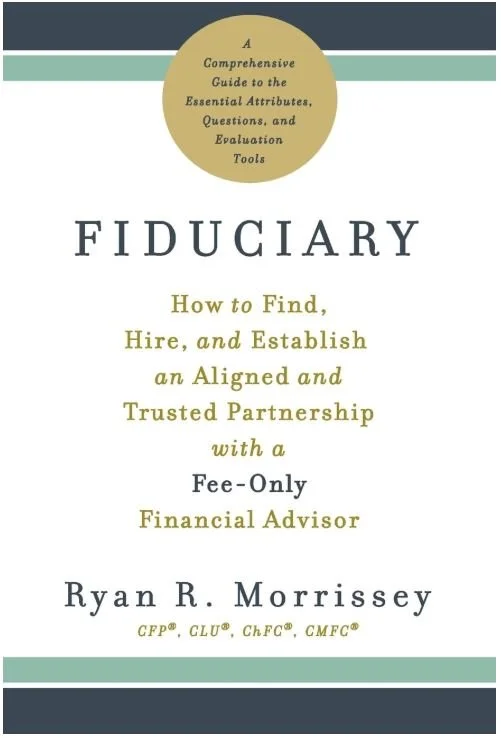
Download a FREE copy today!
Fiduciary - How to Find, Hire, and Establish an Aligned Trusted Partnership with a Fee-Only Financial Advisor
What Can We Learn From Recent IPOs?
Before deciding whether to invest in Anthropic, it helps to look at what happened with other companies that recently went public.
The episode discusses three examples: SpaceX, Cerebras, and Facebook, now known as Meta.
Each provides a different perspective on the risks of buying a stock immediately after its IPO.
1. SpaceX: The Stock Didn't Keep Heading to the Moon
SpaceX went public in June of the year discussed in the episode, generating tremendous interest from investors.
Ryan explains that he received more calls and emails from clients about the SpaceX IPO than he could remember receiving for any other IPO during his 25-year career.
The initial demand was so strong that many investors received only a small portion of the shares they requested.
Here is how the stock performed, according to the episode:
IPO price: $135 per share.
Closing price the following day: $161 per share.
Closing price four days after the IPO: approximately $202 per share.
Price on August 5: $108.27 per share.
Price at the time of recording: approximately $141 per share.
Imagine you were an investor who didn't receive the shares you wanted during the IPO. You decided to purchase the stock a few days later at approximately $202 per share because you didn't want to miss out.
Then the stock dropped to $108.27.
That would have represented a decline of approximately 40% from your purchase price.
Although the stock eventually recovered, it was still trading only modestly above its original IPO price at the time of recording.
The lesson? Just because a company generates tremendous excitement when it goes public doesn't mean its stock price will continue rising.
2. Cerebras: Another IPO With a Disappointing Performance
The episode also discusses Cerebras, a company that develops semiconductors, supercomputers, and related software to power artificial intelligence.
Unlike SpaceX, Cerebras didn't attract as much attention from retail investors.
According to the episode, its IPO and early trading prices were:
IPO price: $185 per share.
Opening price: $350 per share.
First-day closing price: $311 per share.
Price at the time of recording: approximately $95 per share.
That represents a decline of nearly 70% from its IPO price.
It's another example of how a company's initial market excitement can fade, leaving investors who purchased early with substantial losses.

Prefer to listen to this information? — CLICK HERE
3. Facebook (Meta): A Successful Company That Still Took Years to Recover
You might assume that a company with a successful long-term track record would have been a good investment from the very beginning.
But Facebook's IPO tells a different story.
Facebook went public on May 18, 2012, with an IPO price of $38 per share.
It closed its first day of trading at $38.25. After some initial volatility, the stock began falling.
In the days and weeks following the IPO, the price continued to decline until it reached approximately $19 per share.
That's nearly a 50% decline from the IPO price.
Today, Facebook is known as Meta, and the episode notes that its stock price had eventually climbed above $600 per share.
An investor who purchased Facebook stock at the IPO and held it over the long term would have done very well.
But there's an important distinction: It took years for the stock to recover from its initial decline.
Even when a company eventually becomes a successful long-term investment, that doesn't mean buying at the IPO is necessarily the best time to invest.
Why You May Want to Wait 3 to 6 Months Before Buying an IPO
What do these examples have in common?
SpaceX, Cerebras, and Facebook all experienced substantial declines after going public.
The initial excitement surrounding an IPO can create significant demand. But that excitement doesn't always last, and the stock price can fall once the initial trading activity settles down.
That's why Ryan suggests considering a different approach: Rather than buying immediately after an IPO, consider waiting three to six months.
Why wait?
During that period, the company may have an opportunity to announce one or two quarters of earnings. Investors can then begin evaluating how the business is performing after becoming publicly traded.
Instead of making a decision based primarily on excitement and expectations, you have more financial information to consider.
The episode's central message is that you don't necessarily have to rush into an IPO. Waiting may give you a better opportunity to evaluate the company before investing.
Of course, the episode also acknowledges that not every IPO follows the same pattern. Google is given as an example of an IPO that did not experience the same type of initial decline and ultimately became an excellent investment.
But Ryan considers that an exception rather than the typical experience.

What If You Invest in Index Funds Instead of Individual Stocks?
There's another important point for investors who prefer index-based investing.
If you invest in index funds, as Ryan recommends for the majority of his clients' money and his own investments, you don't necessarily need to purchase an individual company's IPO.
Why?
If a company eventually becomes profitable and meets the requirements for inclusion in an index, it may eventually become part of that index.
That means investors who own the index can participate in the company's future growth without having to purchase the stock during its IPO.
How Does a Company Get Added to the S&P 500?
The episode discusses several requirements for a company to be considered for inclusion in the S&P 500.
These include:
At least one year of being publicly traded.
Four positive quarters of GAAP earnings.
Selection by the committee responsible for managing the S&P 500.
The episode uses SpaceX as an example, noting that the earliest it could potentially be added to the S&P 500 would be June 2027.
However, meeting the time requirement alone isn't enough. The company would also need to meet the earnings requirements and be selected by the committee.
If a company like Anthropic eventually becomes profitable, continues growing, and meets the applicable requirements, it could potentially be added to the S&P 500 or another corresponding index.
For investors who already use index funds, that provides another reason not to feel pressured to buy an individual IPO.
What About a Potential OpenAI IPO?
The episode also briefly discusses the possibility of OpenAI, the parent company of ChatGPT, going public in the future.
If that happens, it could generate another wave of interest from investors looking to participate in the growth of artificial intelligence.
But Ryan's perspective remains consistent: Don't let the excitement surrounding a high-profile IPO pressure you into making an investment decision.
Give the company time to establish itself as a publicly traded business, review its financial performance, and consider whether the investment makes sense for your portfolio.
Final Thoughts: Don't Let IPO Excitement Drive Your Investment Decisions
The excitement surrounding artificial intelligence and companies like Anthropic is understandable. AI is changing how people work, search for information, and complete everyday tasks.
But an exciting company doesn't automatically make an exciting stock purchase.
The examples of SpaceX, Cerebras, and Facebook demonstrate that even highly anticipated IPOs can experience significant declines after going public. And even when a company eventually becomes a successful investment, it may take years for the stock to recover from its initial decline.
That's why Ryan's recommendation in the episode is to be patient. If you're interested in buying an individual IPO, consider waiting three to six months so you have more information about the company's performance as a public business.
And if you're an index investor, remember that you may eventually gain exposure to a successful company through the index funds you already own, provided it meets the relevant requirements for inclusion.
Ultimately, investing should be based on your financial goals and investment strategy, not the fear of missing out on the next big IPO.
Have a great week—and I’ll talk to you next Tuesday.
Written by Ryan Morrissey CFP®, CLU®, CHFC®, CMFC
Founder & Principal Advisor of Morrissey Wealth Management
Host of the Retire with Ryan Podcast