
What Is Tax Loss Harvesting?
Ideally, your investments would go up every year. Unfortunately, that isn't how the market works. Even when the overall market is performing well, individual stocks, mutual funds, and other investments can lose value.
Those losses may create an opportunity to reduce your tax bill through a strategy called tax loss harvesting.
Tax loss harvesting involves selling an investment that is worth less than what you originally paid for it. By realizing that loss, you may be able to use it to offset capital gains from other investments, reduce taxable income, or carry unused losses forward to future tax years.
As we approach the end of 2026, it's a good time to review your investment portfolio and see whether you have losses you could potentially use on your taxes.
In this article, we'll walk through the three steps involved in tax loss harvesting, explain how the wash sale rule works, and cover some important considerations before selling an investment.

Who Can Benefit From Tax Loss Harvesting?
Tax loss harvesting applies to investments held outside of retirement accounts.
For example, you may have investments in a taxable brokerage account or another non-retirement investment account. You generally pay taxes on dividends, interest, and realized capital gains from these investments. That's why realizing an investment loss may provide a tax benefit.
Tax loss harvesting does not apply to investments held inside retirement accounts such as:
401(k) plans
403(b) plans
457 plans
Traditional IRAs
Roth IRAs
SEP IRAs
SIMPLE plans
The strategy is specifically relevant to taxable investment accounts.
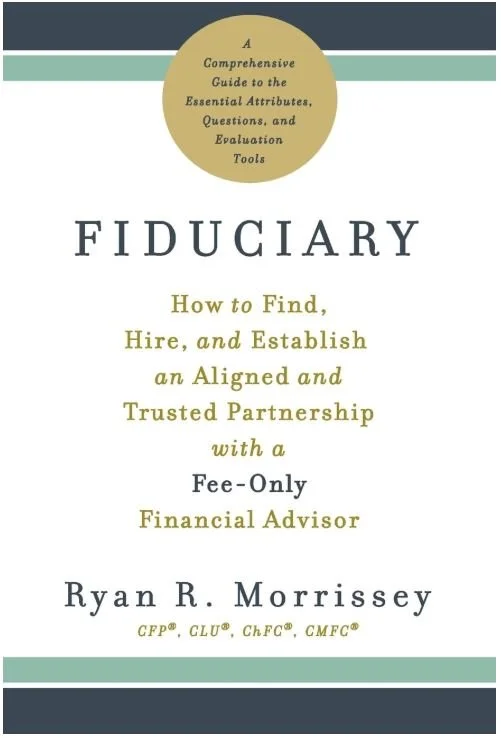
Download a FREE copy today!
Fiduciary - How to Find, Hire, and Establish an Aligned Trusted Partnership with a Fee-Only Financial Advisor
The 3 Steps to Tax Loss Harvesting
Tax loss harvesting involves three basic steps: reviewing your investments, selling investments with losses, and purchasing replacement investments while avoiding the wash sale rule.
Step 1: Review Your Investment Holdings
Start by reviewing your taxable investment accounts to identify investments that are currently worth less than what you paid for them.
Most investment custodians provide a gain-and-loss report through their websites. This report can help you see which investments have increased or decreased in value.
One thing to watch for is missing cost-basis information.
If you purchased an investment at one financial institution and later transferred it to another, the original purchase information may not have transferred correctly. You may need to locate that information and update your records before determining whether an investment has a loss.
Once you have accurate cost-basis information, look for investments whose current value is below your original purchase price.
If you identify an investment with a loss, consider whether selling it makes sense for your portfolio and tax situation.
It's also a good idea to identify a replacement investment before selling. You don't necessarily want to sell an investment, leave the proceeds sitting in a money market account, and potentially miss out on market gains while deciding what to purchase next.
Step 2: Sell the Investment and Purchase a Replacement
Once you've identified an investment with a loss, selling it allows you to realize that loss for tax purposes.
You can then use the proceeds to purchase a different investment that provides similar market exposure without purchasing the same or a substantially identical investment.
For example, if you own a stock that has declined in value but still want exposure to its industry, you might consider a different company in that sector.
The same general concept applies to index funds and ETFs. If you sell an S&P 500 investment, you might consider a fund that tracks a different index, such as a total stock market index.
The goal is to realize the loss while keeping your money invested in an alternative that fits your investment strategy.
Be careful about the wash sale rule.
The wash sale rule can prevent you from claiming a loss if you sell an investment at a loss and purchase the same or a substantially identical investment within 30 days before or after the sale.
In other words, you can't simply sell an investment to claim a loss and then immediately buy it back.
The transcript provides several examples of alternative investments:
Selling NVIDIA and purchasing AMD to maintain exposure to the chip sector.
Selling SPY, an S&P 500 ETF, and purchasing SPTM, a total stock market ETF.
Selling IBIT and purchasing FBTC as alternative Bitcoin ETFs.
These are examples discussed in the episode, not recommendations to purchase any particular investment.
The important point is to understand the wash sale rule before choosing a replacement investment.
Step 3: Use the Losses to Offset Capital Gains and Carry Forward Unused Losses
After selling an investment at a loss, you may be able to use that loss to offset capital gains from other investments.
If your realized losses exceed your gains, the transcript explains that up to $3,000 of the remaining loss can be deducted on your taxes for the year. Any additional unused loss can be carried forward to future years.
Let's look at two examples.
Example 1: You Have Capital Gains and Investment Losses
Suppose you have already realized a short-term capital gain of $20,000 during the year.
Using the 30% tax rate in the episode's example, that gain would result in $6,000 of taxes.
You also have another investment that currently has an unrealized loss of $25,000. If you sell that investment, you can use the realized loss to offset the $20,000 capital gain.
That leaves you with a $5,000 net capital loss.
According to the episode's example:
$3,000 of the remaining loss can be deducted for the current tax year.
The remaining $2,000 can be carried forward to a future year.
Example 2: You Have Investment Losses but No Capital Gains
Now suppose you sell an investment that has a long-term capital loss of $15,000, but you don't have any capital gains to offset.
The episode explains that you could use $3,000 of the loss for the current tax year and carry the remaining $12,000 forward.
You could then continue using the carried-forward losses in future years, subject to the applicable rules.
The potential benefit isn't limited to the year you sell the investment. Unused losses may provide tax benefits in future years, too.

Prefer to listen to this information? — CLICK HERE
Important Tax Loss Harvesting Rules to Understand
Before implementing a tax loss harvesting strategy, there are several important considerations.
Capital Losses Offset Capital Gains First
The episode explains that capital losses are first applied against capital gains.
Long-term capital losses are initially applied to long-term capital gains, while short-term capital losses are initially applied to short-term capital gains. If losses remain in one category, they can then be applied to gains in the other category.
If you still have losses after offsetting gains, you may be able to use the remaining amount as a deduction, subject to the applicable annual limit.
Understand the Wash Sale Rule
The wash sale rule is one of the most important parts of tax loss harvesting.
You generally cannot sell an investment at a loss and purchase the same or a substantially identical investment within 30 days before or after the sale while still claiming that loss.
The episode highlights several situations to watch:
Buying the same investment: Selling a stock or fund at a loss and purchasing it again within the restricted period can trigger the rule.
Purchasing a substantially identical fund: Selling one S&P 500 fund and purchasing another fund tracking the same index may create a wash sale issue.
Using multiple investment accounts: Selling an investment at Charles Schwab and purchasing it at Fidelity doesn't avoid the rule.
Using options: Purchasing an option to maintain exposure to an investment after selling it at a loss may also create a wash sale issue.
The episode emphasizes that determining whether investments are substantially identical isn't always straightforward. You should do your homework before selecting a replacement investment.
Review All Your Taxable Investment Accounts
Don't limit your review to one brokerage account.
Because the wash sale rule can apply across your taxable investment accounts, it's important to consider your holdings and transactions across financial institutions.
Review your cost-basis reports and gain-and-loss reports to identify potential opportunities and avoid inadvertently triggering a wash sale.
Tax Efficiency: Why Investment Choices Matter
Tax loss harvesting is one way to manage the tax consequences of investing, but the types of investments you own can also affect your tax efficiency over time.
The episode discusses the difference between index-based ETFs and actively managed mutual funds.
Index-based ETFs generally aim to track a particular market index. According to the episode, these funds are less likely to distribute capital gains unless you sell your investment.
Actively managed mutual funds operate differently. Their objective is to outperform an index, and their investment activity can result in capital gains distributions.
That means you could receive a capital gains tax bill from an actively managed mutual fund even if you didn't sell your shares. This can happen even in a year when the fund itself has a negative return.
With index-based ETFs and individual stocks or bonds, you generally have more control over when you realize capital gains because you decide when to sell.
That control can be valuable when managing the tax consequences of your portfolio.

Review Your Mutual Fund Expense Ratios
The episode also recommends reviewing what you're paying in mutual fund expenses.
One resource mentioned is Morningstar.com. By entering a mutual fund's ticker symbol, you can review its expense ratio and historical performance.
The expense ratio represents the annual cost of owning the fund. Although you may not see a separate bill, the expense is deducted from the fund's assets.
For example, if a fund has a 1% expense ratio, you're paying 1% annually in fund expenses.
The episode suggests comparing the fund's performance and expense ratio with a comparable index. It also notes that comparable index ETFs may have significantly lower expenses.
Reviewing these costs can help you understand how much you're paying and how your investments are performing relative to their benchmarks.
Make Tax Loss Harvesting Part of Your Year-End Review
Tax loss harvesting can provide an opportunity to use investment losses to offset capital gains and potentially reduce your tax bill.
The process starts with reviewing your taxable investment accounts, identifying investments that have declined in value, and considering whether selling those investments makes sense.
You also need to understand the wash sale rule and identify appropriate replacement investments before making a transaction.
Most importantly, timing matters. If you want the realized losses to apply to 2026, the episode emphasizes taking action before the end of the year.
As you review your portfolio, consider whether there are investment losses you could use this year or carry forward to future tax years.
Final Thoughts: Don't Overlook Tax Loss Harvesting Before Year-End
Tax loss harvesting is an important strategy to consider as you review your investment portfolio at the end of the year. Even if your overall portfolio is performing well, you may have individual investments that have declined in value and could provide an opportunity to reduce your tax bill.
Take the time to review your taxable investment accounts, check your cost basis, and identify any investments with unrealized losses. If you decide to sell, make sure you understand the wash sale rule and have a replacement investment in mind so your money can remain invested.
Remember, tax loss harvesting isn't just about reducing taxes this year. Unused losses may also be carried forward to help offset gains in future years.
The key is to review your portfolio before the year ends and determine whether there are opportunities you can take advantage of for 2026 and beyond.
Have a great week—and I’ll talk to you next Tuesday.
Written by Ryan Morrissey CFP®, CLU®, CHFC®, CMFC
Founder & Principal Advisor of Morrissey Wealth Management
Host of the Retire with Ryan Podcast