There's arguably no hotter topic in retirement planning right now than Roth conversions.
If you're active on social media or follow personal finance discussions, chances are you've been bombarded with reasons why you should consider converting your traditional retirement accounts into Roth IRAs.
But are Roth conversions right for everyone? More importantly, are they right for you?
While Roth conversions can be an effective retirement tax-planning strategy, they aren't necessarily beneficial for everyone. Understanding how they work, the potential tax implications, and when they make sense is essential before making a decision.
In this article, we'll take a closer look at Roth conversions, including:
How Roth conversions work.
How many people are actually doing them.
Who is eligible to make a Roth conversion.
Who may benefit from converting retirement savings.
Who should think twice before doing one.
The tax implications of a Roth conversion.
How to complete a Roth conversion.
When to consider making a conversion.
Let's get started.

What Is a Roth Conversion?
Most people would agree that having tax-free income in retirement is preferable to having taxable income. After all, who wouldn't want their retirement income to be tax-free?
However, many people in their 50s and older have accumulated substantial retirement savings in traditional retirement accounts funded with pre-tax contributions.
This means they received a tax deduction when they contributed the money. Their investments also benefited from tax-deferred growth, meaning capital gains, dividends, and interest weren't taxable as those benefits accumulated inside the accounts.
The trade-off is that when you eventually withdraw money from these accounts, you'll generally owe income taxes on those distributions.
This is what you may have heard described as the retirement "tax bomb": the potential future tax liability associated with the money you've accumulated in pre-tax retirement accounts.
You may eventually take withdrawals to:
Fund your retirement income.
Satisfy required minimum distributions (RMDs) once you reach the applicable age.
Provide inherited retirement account balances to your beneficiaries.
One strategy that may help reduce this future tax liability is a Roth conversion.
A Roth conversion involves moving money from a pre-tax retirement account, such as a traditional IRA, into a Roth IRA.
When you complete the conversion, the converted amount becomes taxable income in the year of the conversion.
In exchange for paying taxes now, you move that money into a Roth IRA, where it can benefit from tax-free growth and potentially tax-free withdrawals, subject to the applicable rules.
The goal is to pay taxes at a potentially lower rate today rather than facing a higher tax bill on withdrawals in the future.
However, whether that strategy makes sense depends on your individual financial situation.
How Many People Are Actually Doing Roth Conversions?
If you follow financial discussions on social media, you might get the impression that just about everyone is doing Roth conversions.
And if you're not, you may feel like you're missing out.
But the actual numbers tell a different story.
According to research discussed in this episode, the Investment Company Institute reported that approximately 1.6 million Roth conversions took place in 2023, based on data obtained from the IRS.
The total amount converted was approximately $36.7 billion.
That sounds like a substantial amount of money until you consider that there are approximately $17 trillion in traditional IRAs in the United States.
The average Roth conversion was just under $23,000.
Fidelity also reported that it had approximately 20 million IRA customers, and only about 2% of those customers completed Roth conversions in 2025.
The takeaway?
Despite all the attention Roth conversions receive, not everyone is converting their retirement savings.
That doesn't mean Roth conversions aren't beneficial. It simply means they're a strategy that needs to be evaluated based on your circumstances rather than something everyone should automatically do.
Who Is Eligible to Make a Roth Conversion?
One of the advantages of Roth conversions is that there isn't an age restriction preventing you from completing one.
You can generally make a Roth conversion at any age, including before age 59½.
However, there are some important considerations.
You Don't Have to Convert Your Entire IRA
One common misconception is that you must convert your entire traditional IRA balance into a Roth IRA.
That's not the case.
You can complete a partial Roth conversion, meaning you only convert a portion of your pre-tax retirement savings.
For example, rather than converting your entire IRA balance and potentially creating a substantial tax bill, you could convert a smaller amount each year.
This allows you to manage how much additional taxable income you're creating through the conversion.
Inherited IRAs Have Different Rules
An inherited IRA from a non-spouse generally isn't eligible for a Roth conversion.
However, if you inherited your spouse's IRA, you may be able to convert those assets into a Roth IRA.
It's important to understand the distinction before attempting a conversion involving inherited retirement assets.
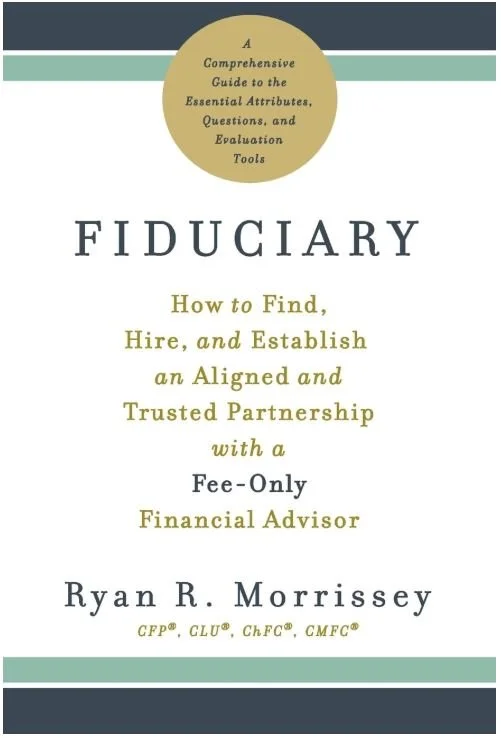
Download a FREE copy today!
Fiduciary - How to Find, Hire, and Establish an Aligned Trusted Partnership with a Fee-Only Financial Advisor
Understand the Five-Year Rule
Another important consideration is the five-year rule.
Each Roth conversion starts a new five-year clock.
If you withdraw converted money before the applicable five-year period has passed, you could face taxes or penalties on the gains associated with the converted amount.
This is particularly important if you're considering a Roth conversion before age 59½ or anticipate needing access to the converted money in the near future.
You also need to make sure the appropriate tax documentation is completed when you make your conversion.
Who Can Benefit From a Roth Conversion?
Now that you understand what a Roth conversion is, the next question is whether it could benefit you.
There are several situations where converting traditional retirement savings into a Roth IRA may make sense.
1. You Expect to Be in a Higher Tax Bracket in Retirement
One of the primary reasons to consider a Roth conversion is if you're currently in a relatively low tax bracket but expect to be in a higher tax bracket in the future.
In this situation, paying taxes on the conversion today could potentially be more beneficial than paying taxes on future withdrawals at a higher rate.
This is particularly relevant if you have opportunities to convert money during years when your taxable income is relatively low.
2. You Want to Reduce Future Required Minimum Distributions
Required minimum distributions, commonly called RMDs, are another reason people consider Roth conversions.
Under the age rules discussed in this episode:
Individuals born before 1960 generally begin RMDs at age 73.
Individuals born in 1960 or later generally begin RMDs at age 75.
Once you reach your applicable RMD age, you'll be required to withdraw money from your traditional retirement accounts.
Those distributions can increase your taxable income.
By converting some of your traditional IRA money into a Roth IRA before reaching your RMD age, you may reduce the amount remaining in your traditional IRA and potentially reduce future required distributions.
For example, if you're currently 70 years old and want to minimize the amount you'll eventually need to withdraw through RMDs, converting some of your traditional IRA balance now may be worth considering.
3. You Want to Leave a Tax-Free Inheritance to Your Family
Another potential benefit of Roth conversions involves estate planning.
If you want to leave retirement assets to your children or other beneficiaries, converting traditional IRA money into a Roth IRA may be worth considering.
Essentially, you're choosing to pay the taxes on those retirement assets during your lifetime.
The objective is to leave your beneficiaries Roth IRA assets that can provide tax-free distributions under the applicable Roth IRA rules.
For some people, paying taxes now to potentially leave a more tax-efficient inheritance is an attractive strategy.
4. You Have a Large Balance in Pre-Tax Retirement Accounts
If you're a high earner who has accumulated a substantial amount of money in traditional IRAs and other pre-tax retirement accounts, Roth conversions may be worth evaluating.
A large traditional IRA balance can result in substantial required minimum distributions later in retirement.
Depending on your other sources of retirement income, those distributions could create a significant tax liability.
Converting some of those assets over time may help reduce that future balance.
However, the amount you convert and the tax rate you pay to do so are important considerations.
Who Should Probably Think Twice About Roth Conversions?
While Roth conversions can be beneficial, there are also situations where they may not make financial sense.
In fact, there are several circumstances where converting pre-tax retirement savings into a Roth IRA could actually work against your retirement plan.
1. You Expect to Be in a Lower Tax Bracket in Retirement
This is one of the most important considerations.
The traditional retirement account strategy is based on the idea that you receive a tax deduction when you're working and contributing money, then pay taxes on withdrawals when you're retired.
Ideally, you're earning a relatively high income during your working years and a lower income during retirement.
For example, imagine you're earning $300,000 annually while working but expect your retirement income to be approximately $100,000.
You may benefit from taking the tax deductions while you're earning a higher income and paying taxes on your retirement withdrawals at a lower tax rate.
In that situation, paying taxes today through a Roth conversion may not be advantageous.
2. You're Having a Particularly High-Income Year
If you're currently experiencing a year with unusually high income but expect your income to decline in the future, converting retirement savings could create an unnecessary tax burden.
Remember, the amount you convert is added to your taxable income for that year.
If that pushes you into a higher tax bracket, you could end up paying more in taxes than you would have by waiting for a lower-income year.
Timing matters.
3. A Roth Conversion Could Trigger IRMAA
If you're approaching Medicare age or already receiving Medicare, you've probably heard of IRMAA.
IRMAA is an additional amount you may have to pay for Medicare based on your taxable income.
Because Roth conversions increase your taxable income in the year you complete them, they could potentially trigger higher Medicare premiums.
This is an important consideration when evaluating whether a conversion makes sense.
The additional Medicare costs should be factored into your overall tax-planning strategy.
4. You're Planning to Make Qualified Charitable Distributions
If you're charitably inclined and plan to donate some of your required minimum distributions to charity through qualified charitable distributions (QCDs), a Roth conversion may not be the best strategy for that portion of your retirement savings.
A qualified charitable distribution allows eligible IRA distributions to go directly to a qualifying charity without being reported as taxable income.
If you're already planning to donate some of your IRA money this way, converting that money into a Roth IRA may not provide the same benefit.
After all, if you're not going to pay income taxes on that money when it's distributed through an eligible QCD, why pay taxes on it through a Roth conversion?
5. You Have a Short Life Expectancy
Another factor to consider is your life expectancy.
There is a break-even point associated with Roth conversions.
When you convert traditional IRA money into a Roth IRA, you pay taxes upfront.
You then need time for the benefits of tax-free growth and potentially tax-free withdrawals to offset the taxes you paid to complete the conversion.
If your life expectancy is relatively short, there may not be enough time for the conversion to provide the financial benefits you're anticipating.
This doesn't automatically mean a Roth conversion is inappropriate, but it's another factor that should be included in the analysis.

Prefer to listen to this information? — CLICK HERE
What Are the Tax Implications of a Roth Conversion?
Taxes are one of the biggest considerations when deciding whether to complete a Roth conversion.
As mentioned earlier, the amount you convert is added to your taxable income for the year in which the conversion takes place.
This means your other sources of income need to be considered.
For example:
If you're still working, your Roth conversion is added to your other income for the year.
If you're retired and collecting Social Security, the conversion is considered alongside your other income.
If you're retired and receiving both Social Security and a pension, those income sources also need to be considered.
Ultimately, the amount you convert can affect your overall tax liability.
Should You Pay Roth Conversion Taxes From the IRA or Outside Funds?
One important decision is how you'll pay the taxes associated with your Roth conversion.
Let's say you decide to convert $50,000 from your traditional IRA into a Roth IRA.
For illustration purposes, let's assume the taxes associated with that conversion are $5,000.
You have two options.
Option 1: Pay the taxes from the conversion itself.
You could withhold $5,000 from the $50,000 conversion to cover the taxes.
That would leave you with $45,000 going into your Roth IRA.
Option 2: Pay the taxes using money outside your retirement accounts.
Alternatively, you could convert the full $50,000 into your Roth IRA and use cash or other non-retirement funds to pay the associated taxes.
This second option can be more powerful because the entire $50,000 gets moved into the Roth IRA and can benefit from its potential tax-free growth.
However, it requires having sufficient money outside your retirement accounts to pay the taxes.
This is one of the biggest obstacles for people considering Roth conversions.
If most of your savings are in pre-tax retirement accounts and you don't have substantial outside assets available to pay the taxes, the strategy may be less attractive.
That doesn't necessarily mean a conversion won't make sense, but it does reduce some of the potential benefit.
When Is the Best Time to Complete a Roth Conversion?
Ideally, you want to consider completing Roth conversions during years when your taxable income is relatively low.
For example, the early years of retirement can present an opportunity.
You may have stopped working but haven't started collecting Social Security or a pension yet.
As a result, your taxable income may be considerably lower than it was during your working years or will be later in retirement.
Those years could provide an opportunity to convert some of your traditional IRA savings at a lower tax rate.
Understanding the 12% Tax Bracket
As discussed in this episode, the 2026 federal income tax brackets provide an example of how you might approach Roth conversion planning.
For 2026, the 12% federal tax bracket extends to taxable income of:
Single filers: $48,475.
Married couples filing jointly: $96,950.
These amounts are based on taxable income after the applicable standard deduction.
Depending on whether you take the standard deduction or itemize your deductions, your total income could be higher while still remaining within the 12% tax bracket.
The important concept is that you may be able to convert additional retirement savings while staying within a particular tax bracket.
For some retirees, that creates an opportunity to gradually move money from traditional IRAs into Roth IRAs without immediately pushing themselves into substantially higher tax brackets.
Does It Ever Make Sense to Convert at the 22% Tax Bracket?
Absolutely, depending on your circumstances.
While converting at a 12% tax rate may be attractive, that doesn't mean a Roth conversion at 22% is automatically a bad idea.
For example, it could still make sense if:
You have a particularly large traditional IRA balance.
You want to reduce future required minimum distributions.
You want to leave a tax-efficient inheritance to your family.
You expect your retirement income to increase substantially in the future.
If you have a strong pension, Social Security income, and substantial future RMDs, you may eventually find yourself in a higher tax bracket anyway.
In that situation, paying taxes at 22% today could potentially be preferable to paying taxes at a higher rate later.
The decision ultimately depends on your projected income, retirement goals, and assumptions about future tax rates.

How Do You Know If a Roth Conversion Will Benefit You?
This is where retirement planning becomes especially important.
You can't simply look at your current IRA balance and decide that converting some of it into a Roth IRA is automatically a good idea.
You need to evaluate your current tax situation and project what your future retirement income and tax liability could look like.
This means looking at several factors, including:
The current value of your traditional IRA and other pre-tax retirement accounts.
Your projected future IRA balances.
Your anticipated required minimum distributions.
Your future Social Security income.
Any pension income you expect to receive.
Your projected taxable income during retirement.
The potential tax rates you'll face in future years.
Working with a knowledgeable financial advisor and/or your CPA can help you evaluate these factors.
You want to project what your future taxes may look like with and without Roth conversions.
You also need to make assumptions about future tax rates because we don't know exactly what those rates will be.
Ultimately, you need to run the numbers.
A Roth conversion that looks attractive on social media may not make sense for your particular financial situation.
And the opposite is also true. Just because only a relatively small percentage of IRA investors are completing conversions doesn't mean you shouldn't consider one.
The numbers are what matter.
How to Complete a Roth Conversion
If you've determined that a Roth conversion makes sense, the actual process is relatively straightforward.
However, it's important to follow the appropriate steps.
Step 1: Open a Roth IRA
First, you'll need a Roth IRA account.
Ideally, you'll have your traditional IRA and Roth IRA held at the same financial institution so the conversion can be completed more easily.
For example, if you're working with Charles Schwab, you could have both your traditional IRA and Roth IRA accounts held there.
Step 2: Move Eligible Retirement Assets Into Your Traditional IRA
If the money you want to convert is currently sitting in an old employer-sponsored retirement plan, such as a 401(k) or 403(b), you'll generally need to move those assets into a traditional IRA first.
The money needs to be in the appropriate traditional IRA before you complete the conversion to your Roth IRA.
Step 3: Determine How Much You Want to Convert
You don't have to convert your entire retirement account.
Determine the amount that makes sense based on your tax planning.
This is where working with your financial advisor and CPA can be particularly helpful.
You want to understand how much additional taxable income the conversion will create and how that affects your overall tax situation.
Step 4: Complete the Conversion Paperwork
Once you've determined the amount, you'll need to complete the necessary paperwork with your financial institution.
You'll also need to decide whether you want taxes withheld from the conversion or whether you'll pay the taxes using money outside the retirement account.
Step 5: Transfer the Money Into Your Roth IRA
Once the paperwork is completed, the financial institution will move the selected amount from your traditional IRA into your Roth IRA.
At that point, your conversion is complete.
Step 6: Report the Conversion on Your Tax Return
Finally, you need to make sure the Roth conversion is properly reported on your tax return.
This involves IRS Form 8606.
If you're working with an accountant, they can complete the appropriate documentation.
If you're preparing your own taxes, your tax preparation software should help you report the conversion and complete the required form.
It's important to double-check that the conversion is reported correctly.
When Should You Complete Your Roth Conversion?
Roth conversions are particularly time-sensitive because they need to be completed within the calendar year to count toward that year's taxable income.
For example, if you're considering a conversion toward the end of the year, you don't want to wait until the last minute.
As discussed in this episode, financial institutions may ask that Roth conversion requests be submitted by the beginning of December to ensure there's enough time to process them before year-end.
Even if you submit the paperwork later, the institution may not guarantee that the conversion will be completed before December 31.
That's why planning ahead is important.
If you're considering a Roth conversion, here's what I'd recommend:
Meet with your financial advisor and/or CPA.
Review your current income and projected future retirement income.
Evaluate your future RMDs and potential tax liability.
Determine how much you may want to convert.
Decide how you'll pay the associated taxes.
Submit the conversion paperwork early enough to allow the financial institution to process it before year-end.
This shouldn't be a decision you make simply because you've heard that Roth conversions are a good idea.
It should be part of a larger retirement and tax-planning strategy.
At Morrissey Wealth Management, we review our clients' tax situations and complete tax projections toward the end of each year. This allows us to have conversations about whether Roth conversions make sense and gives us an opportunity to complete them before the end-of-year deadline.
It's also important to continue reviewing your strategy in future years.
Your income, retirement balances, and tax situation can change, so the amount that makes sense to convert one year may be very different from the amount that makes sense the following year.
Can You Still Do Roth Conversions After Starting Required Minimum Distributions?
Yes.
Even after you begin taking required minimum distributions at age 73 or 75, depending on your birth year, you can still complete Roth conversions.
However, the conversion would be in addition to your required minimum distribution.
In other words, you can't use a Roth conversion to satisfy your RMD.
This is another reason why it's beneficial to start evaluating Roth conversions before reaching your required minimum distribution age.
Final Thoughts: Are Roth Conversions Worth It?
Roth conversions can be an excellent retirement tax-planning strategy, but they're certainly not right for everyone.
The biggest mistake you can make is assuming that you should convert your traditional IRA into a Roth IRA simply because everyone seems to be talking about it.
For some retirees, converting money at a relatively low tax rate today could provide substantial long-term benefits.
For others, particularly those who expect to be in a lower tax bracket during retirement, paying taxes upfront may not make financial sense.
You also need to consider required minimum distributions, Medicare premiums, charitable giving strategies, your ability to pay the conversion taxes, and your overall retirement goals.
Most importantly, you need to run the numbers.
Work with a knowledgeable financial advisor and/or CPA to determine whether Roth conversions belong in your retirement plan.
The right strategy isn't about following what everyone else is doing. It's about making decisions that help you keep more of your hard-earned money throughout retirement.
Have a great week—and I’ll talk to you next Tuesday.
Written by Ryan Morrissey CFP®, CLU®, CHFC®, CMFC
Founder & Principal Advisor of Morrissey Wealth Management
Host of the Retire with Ryan Podcast