
If you have a child under the age of 18 and haven't yet claimed their Trump account, this is something you may want to pay attention to.
The U.S. Department of the Treasury recently announced that more than 60 million children have been automatically enrolled in Trump accounts. If your child is eligible, there are several reasons why you should consider claiming their account and taking advantage of the benefits these accounts may offer.
Trump accounts, also known as 530A accounts, are tax-advantaged investment accounts designed to help children build long-term wealth, particularly toward retirement.
And while retirement may seem like a lifetime away for your child, getting started early can make a tremendous difference.
In this article, I'll discuss six reasons why you should consider claiming and setting up a Trump account for your child, how these accounts work, who is eligible, and how they could potentially help your child accumulate a substantial amount of money over their lifetime.
Here are the six reasons we'll cover:
Free money from the federal government.
Potential philanthropic and corporate contributions.
Tax-deferred investment growth.
Access to low-cost index fund investments.
Contributions from family members and employers.
A tremendous head start on retirement savings.
Let's take a closer look.

What Are Trump Accounts?
Trump accounts, also known as 530A accounts, are tax-advantaged investment accounts introduced in 2025 under the One Big Beautiful Bill Act.
They're designed to help children in the United States begin accumulating wealth at an early age, with a particular focus on retirement savings.
Here are some of the key features:
Contributions of up to $5,000 annually are allowed until the year the child turns 18.
The account is designed to grow through investments.
Children don't need earned income to receive contributions.
The child generally cannot access the money until age 18.
Once the child reaches age 18, the account becomes theirs.
Children born between January 1, 2025, and December 31, 2028, are eligible for a $1,000 government seed contribution.
These accounts are essentially starter retirement accounts for children.
Normally, if you want to contribute to a retirement account for someone, including your child, they need to have earned income during the year of the contribution.
Earned income generally means W-2 wages or self-employment income.
Unless your child has a lucrative career as a baby model, they're probably not going to have earned income at a very young age.
That means they generally wouldn't be eligible to contribute to a traditional retirement account such as a Roth IRA until they start earning money.
Trump accounts provide an opportunity to get around that requirement by allowing contributions even when the child has no earned income.
This gives children a tremendous head start on building retirement savings.
Who Is Eligible for a Trump Account?
According to the eligibility requirements discussed in this episode, your child must:
Be a U.S. citizen.
Have a valid Social Security number.
Be under age 18.
If your child meets these requirements, you should consider claiming their account.
How Do You Claim Your Child's Trump Account?
The accounts were expected to become available for setup beginning in July 2026.
If you haven't claimed your child's account yet, you can follow the process discussed in this episode to do so.
The process involves downloading the Trump app and following the instructions.
You'll generally need to:
Download the Trump app on your phone.
Enter your personal information.
Complete the identity verification process.
Take a picture of yourself and provide a valid form of identification.
Once verified, enter your child's information.
Follow the instructions to claim the child's account.
If you're a parent or legal guardian, you can claim the account for your child.
However, grandparents cannot claim an account for a grandchild unless they are the child's legal guardian.
If you have multiple children, you can claim their accounts through the same username on the Trump app.
One important tip: Make sure your child's name, Social Security number, and date of birth match the information on file with the Social Security Administration. This can help avoid unnecessary delays during the verification process.
Now let's get into the six reasons why I believe parents should seriously consider claiming their children's Trump accounts.
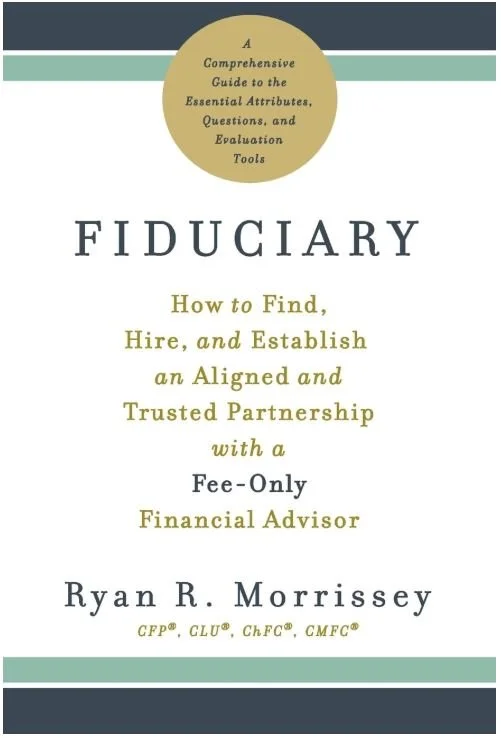
Download a FREE copy today!
Fiduciary - How to Find, Hire, and Establish an Aligned Trusted Partnership with a Fee-Only Financial Advisor
Reason #1: Your Child Could Receive Free Money From the Government
Who doesn't like free money?
One of the biggest advantages of Trump accounts is the government seed contribution available to eligible children.
Children born between January 1, 2025, and December 31, 2028, are eligible to receive a $1,000 contribution from the federal government.
That's $1,000 deposited into an investment account for your child without you having to contribute the money yourself.
However, there's an important catch.
You need to claim your child's Trump account to receive this government contribution.
If you haven't claimed the account, you could miss out on this opportunity.
For parents with children who fall within the eligible birth-date range, this is one of the biggest reasons to get the account established.
And remember, this money is going into an investment account designed to grow over time.
The earlier that money is invested, the more time it has to potentially compound.
Reason #2: Your Child Could Receive Philanthropic and Corporate Contributions
The second reason to consider claiming your child's Trump account is the possibility of receiving additional contributions from philanthropic organizations and corporations.
Several individuals and organizations have announced plans to contribute money to Trump accounts.
Here are some examples discussed in this episode.
Michael and Susan Dell Foundation Contributions
The Michael and Susan Dell Foundation announced a $250 contribution for eligible children.
Unlike the federal government's $1,000 seed contribution, this opportunity was discussed as being available for children born before 2025 as well.
Eligibility is based in part on the ZIP code where the child lives.
According to the information discussed in the episode, children living in ZIP codes with a median income below $150,000 may qualify for this contribution.
That means some children who aren't eligible for the government's $1,000 seed contribution may still qualify for additional money through philanthropic programs.
Potential Contributions From Elon Musk
Elon Musk has also recently discussed the possibility of contributing shares of SpaceX to Trump accounts.
In addition, more than 100 other individuals and foundations have reportedly expressed interest in contributing to these accounts.
The important takeaway is that there may be opportunities for children to receive money from sources beyond their parents and the federal government.
However, these contributions aren't necessarily guaranteed for every child.
By claiming your child's account, you can put them in a position to potentially receive contributions if they meet the applicable eligibility requirements.
Reason #3: Tax-Deferred Growth Can Help Your Child Accumulate More Wealth
This is one of the most important advantages of Trump accounts.
Tax-deferred investment growth can make a substantial difference over a long period of time.
If you've listened to my other discussions about retirement planning, you'll know that I'm a big fan of allowing investments to grow over time.
The power of compounding is one of the most important concepts in building long-term wealth.
Trump accounts allow investments to grow on a tax-deferred basis.
That means dividends, interest, and capital gains generated within the account aren't taxed as they're received.
Instead, the money can remain invested and continue growing without annual taxation on that investment growth while it remains in the account.
This allows more of the investment earnings to remain invested and potentially compound over time.
How Does This Compare to a UGMA or UTMA Account?
You may be wondering why you wouldn't simply use a custodial account, such as a UGMA or UTMA, to save money for your child.
These accounts are another way parents and family members can invest money on behalf of children.
However, one important difference involves how investment income is taxed.
With a UGMA or UTMA account, investment earnings may be subject to what's known as the kiddie tax.
As discussed in this episode, the first $1,350 of a child's unearned income is taxed at a 0% rate.
The next $1,350 is taxed at the child's tax rate.
Amounts above $2,700 are then subject to taxation at the parent's tax rate under the rules described in the episode.
This means that as investments grow inside a custodial account, the child could potentially have tax consequences along the way.
With a Trump account, investment growth is tax-deferred instead.
That can be a significant advantage when you're investing money intended to remain invested for decades.

Prefer to listen to this information? — CLICK HERE
Reason #4: You Can Invest in Low-Cost Index Funds
Another major advantage of Trump accounts is the ability to invest in low-cost index funds.
If you've read my book or listened to my other podcast episodes about investing, you know that I'm a big believer in using low-cost index funds.
Why?
Because investment costs matter.
The more you pay in investment expenses, the less money you have remaining to grow for you.
Lower investment costs mean more of your money stays invested and has the opportunity to compound over time.
What Investments Are Available in Trump Accounts?
According to the information discussed in this episode, the current default investment option is the State Street SPDR S&P 500 ETF, with the ticker symbol SPYM.
This exchange-traded fund is designed to track the S&P 500, which represents 500 of the largest companies in the United States.
The fund has an annual expense ratio of 0.10%.
That means the annual investment cost is relatively low.
For example, an expense ratio of 0.10% represents approximately $10 in annual expenses for every $10,000 invested, based on the stated expense ratio.
I like the idea of having children's retirement savings invested in a low-cost index fund because it allows them to participate in the growth of the underlying investments while keeping investment expenses relatively low.
Will There Be Other Investment Options?
The Treasury Department has indicated that additional ETF investment options will eventually become available.
According to the information discussed in this episode, there are plans to offer four different ETFs, including options from iShares and Vanguard.
We'll have to wait and see when those additional investment choices are actually implemented.
For now, the default investment option discussed is the S&P 500 index ETF.
Reason #5: Family Members and Employers Can Contribute
The fifth reason to consider claiming a Trump account is that you're not limited to making contributions yourself.
Family members and employers may also be able to contribute.
As mentioned earlier, the annual contribution limit discussed in this episode is $5,000.
Contributions can come from parents, guardians, and other family members.
Grandparents and Other Family Members Can Help
Let's say you don't have the financial ability to contribute the full $5,000 each year.
That doesn't mean your child can't benefit from the account.
You could ask other family members to help contribute.
For example, grandparents may want to take some of the money their grandchild receives for birthdays or holidays and contribute it toward their future retirement savings.
You may also be able to link a bank account to the Trump account to make contributions.
This could provide another opportunity for family members to help fund the account.
Instead of simply giving a child money that they may spend immediately, family members could potentially contribute toward something that will benefit them decades into the future.
Employers May Also Be Able to Contribute
Another interesting feature is the ability for employers to contribute toward an employee's child's Trump account.
According to the information discussed in this episode, employers can contribute up to $2,500 tax-free on behalf of an employee's child.
This could eventually become an additional employee benefit offered by companies.
Imagine an employer helping its employees build wealth for their children by making contributions to their Trump accounts.
It's another potential way families could accumulate money in these accounts without relying exclusively on their own contributions.
Reason #6: You're Giving Your Child a Tremendous Head Start on Retirement
This is perhaps the biggest reason to consider claiming and funding a Trump account.
You're giving your child the opportunity to start saving for retirement decades before most people even begin thinking about it.
The earlier money is invested, the more time it has to grow and compound.
Let's look at an example of what this could mean.
How Much Could a Fully Funded Trump Account Grow?
Imagine you have a child born in 2026.
That child would have 17 years of potential contributions before reaching age 18.
If you contributed the maximum $5,000 each year, the total contributions over those 17 years would be:
<escape>$5,000 × 17 years = $85,000</escape>
That's $85,000 in total contributions before considering any investment growth.
Now let's assume those investments earn an average annual return of 8%.
Here's what the account could potentially grow to:
Child's agePotential account value18$182,00030$500,00040$1 million
<small>Illustrative projections based on the 8% annual growth assumption discussed in the podcast. These are hypothetical figures, not guaranteed investment returns.</small>
Think about that for a moment.
Your child could potentially have $1 million saved toward retirement by age 40.
Most people would be thrilled to have that kind of retirement savings at age 40, let alone having the opportunity to accumulate it through contributions that started during childhood.
And this example assumes the account receives the maximum contribution each year.
Even if you can't contribute the full $5,000, smaller contributions can still make a meaningful difference over time.
The point is that time is one of the biggest advantages your child has.

What Happens to a Trump Account When Your Child Turns 18?
One important feature of Trump accounts is that the money isn't generally accessible while the child is under age 18.
Once your child reaches age 18, the account becomes theirs.
According to the process discussed in this episode, the account is then automatically converted into a pre-tax IRA, or individual retirement account.
This means the child now has retirement savings that can continue growing, but they'll also need to understand the tax implications of eventually withdrawing that money.
Because the account is treated as pre-tax retirement savings, distributions will generally be taxable.
And if the child withdraws money before age 59½, there may also be a 10% early withdrawal penalty, in addition to applicable taxes.
However, there's another strategy worth considering.
Should Your Child Convert Their Trump Account to a Roth IRA?
Once the Trump account transitions into a traditional, pre-tax IRA, your child may eventually have the opportunity to convert that money into a Roth IRA.
This could be an excellent long-term tax-planning opportunity.
Remember, money in a traditional IRA is generally taxable when withdrawn.
Money in a Roth IRA, on the other hand, can potentially be withdrawn tax-free when the applicable requirements are met.
So you might be thinking:
Why wouldn't your child simply convert the entire account to a Roth IRA as soon as they turn 18?
They potentially could, but there's an important tax consideration to understand first.
Understanding the Kiddie Tax
The kiddie tax applies to certain unearned income received by children and some young adults.
As discussed in this episode, the rules can continue to apply beyond age 18.
For example, the kiddie tax may still apply if:
The individual is 18 or older but doesn't provide more than half of their own support through earned income.
The individual is between ages 19 and 23, is a full-time student, and doesn't provide more than half of their own support through earned income.
In other words, simply turning 18 doesn't necessarily mean your child is no longer subject to these rules.
If your child is still attending school and relying on parental support, this could affect the timing of a Roth conversion.
When Could a Roth Conversion Make Sense?
An opportunity may arise once your child finishes school, starts working full-time, and is financially supporting themselves.
For many people, this could happen somewhere between ages 22 and 24.
At that point, your child may have a relatively low income compared to what they could earn later in their career.
This could create an opportunity to convert some or all of their traditional IRA into a Roth IRA at a potentially lower tax rate.
As discussed in this episode, the estimated combined federal and state tax rate could be approximately 20% to 25%, depending on future tax rates and the state where your child lives.
Yes, they would have to pay taxes on the conversion.
But in exchange, they could move those retirement assets into a Roth IRA and potentially eliminate future income taxes on qualified withdrawals.
Imagine giving your child not only a substantial retirement account but also an opportunity to manage the taxes on that account while they're still relatively young.
That's a tremendous potential benefit.
And remember, your child doesn't need to have the full $85,000 in contributions for this strategy to be worthwhile.
Even if they have $30,000 or $40,000 in their account by age 18, that's still a meaningful head start on retirement savings.
The more time that money has to grow and compound, the greater its potential long-term value.
Final Thoughts: Should You Claim Your Child's Trump Account?
Trump accounts provide an interesting opportunity for parents and families to help children begin building wealth at a very young age.
Between the potential government seed contribution, philanthropic contributions, tax-deferred growth, low-cost investment options, and the ability for family members and employers to contribute, there are several reasons to consider claiming an account for your child.
But perhaps the biggest advantage is the time your child has to allow that money to grow.
Starting to invest at age 1, 5, or 10 is very different from starting at age 30 or 40.
By giving your child a head start now, you could potentially put them in a much stronger financial position when they eventually reach retirement.
You don't necessarily need to contribute the maximum $5,000 every year.
Even smaller contributions can make a difference over time.
My recommendation is to understand the account, determine whether your child is eligible, and consider claiming it so you don't miss out on potential contributions and benefits.
If you haven't already claimed your child's account, download the Trump app and follow the instructions to get started.
And if you know someone who has children, grandchildren, nieces, or nephews, make sure their parents know about these accounts and consider whether claiming one makes sense.
Have a great week—and I’ll talk to you next Tuesday.
Written by Ryan Morrissey CFP®, CLU®, CHFC®, CMFC
Founder & Principal Advisor of Morrissey Wealth Management
Host of the Retire with Ryan Podcast