Most Asked Financial Questions of 2025
As we press on into 2026, I want to take some time to reflect on the most common financial and retirement questions I received in 2025 from both clients, readers of my blog, and podcast listeners.
This past year has been a bittersweet one for me personally. I lost my mom early in 2025, which was incredibly difficult for my family and me. At the same time, I’m deeply grateful that 2025 was also a strong year professionally. The podcast continued to grow, our listener base expanded, and Morrissey Wealth Management had the opportunity to help more families plan for and navigate retirement.
In this post, I’ll walk you through the top financial questions of 2025—and share how I generally approached answering each of them.
But first,
A Special Gift to Listeners and Readers
Before we dive in, I want to extend a special offer to those looking to build a clearer retirement plan.
My online course, Retirement Readiness Review: On Demand, is available for a limited-time discount of $99 through the end of January (normally $297).
The course includes over 7 hours of content covering:
Taxes and retirement tax planning
Investment strategies
Social Security and Medicare
Insurance and estate planning
Actionable checklists to help you organize your retirement
To enroll, visit retirewithryan.com, click Courses, then Retirement Readiness On Demand, and use promo code “RETIRE99”.

Click here to learn more about my on demand Retirement Readiness Course — Use Code “RETIRE99” through January 31st,2026 to sign up for just $99 ($197 off)
The Top Financial Questions of 2025
These questions are listed in no particular order, but they represent the themes I heard most often throughout the year.
1. Will Social Security Be There When I Retire?
This is consistently the most asked question.
According to the most recent Social Security Trustees Report, full benefits can be paid through approximately 2033. If no changes are made, benefits would then be reduced to roughly 77–81% of scheduled amounts.
While this is understandably concerning, I believe Social Security will continue to exist in some form. Too many Americans rely on it as a primary source of retirement income, and a sudden 20% reduction would have massive economic consequences.
Congress has strong incentives to act—even if it happens later than ideal. My view: don’t panic, but do plan conservatively and assume some level of adjustment may occur in the future.
2. How Do I Handle Rising Inflation in Retirement?
Inflation has been a major concern since the post-COVID economic surge, driven by government stimulus and pent-up consumer demand.
For retirees, inflation is particularly challenging because income sources—such as Social Security and pensions—are often fixed or only partially adjusted.
The most effective long-term hedge against inflation remains equities (stocks). Historically, stocks are the only major asset class that has consistently outpaced inflation over time.
While stocks bring volatility, maintaining an appropriate allocation—balanced with your income needs and comfort level—is critical for protecting purchasing power.
If you’re not yet retired, working longer, delaying Social Security, and investing appropriately can significantly improve your ability to combat inflation.
3. How Much Do I Need to Retire Comfortably?
There is no universal “magic number.”
Retirement planning is about income replacement, not account balances.
A simple framework:
Estimate your retirement expenses
Add projected income from Social Security and pensions
Determine how much income your investments can safely provide
Adjust for taxes
For example, a $1 million portfolio using a conservative 4% withdrawal rate can generate about $40,000 per year. Add Social Security or pension income, subtract estimated taxes, and compare that number to your expenses.
If there’s a gap, planning helps you determine how to close it—through saving more, adjusting retirement timing, or refining investment strategy.

Click here to listen to this week’s episode on: 4 Things All Successful Retirees do!
4. Should I Be Investing in Bitcoin?
Bitcoin is easier to invest in today, especially through ETFs, but it remains highly speculative.
In 2025, Bitcoin significantly underperformed the stock market. While it may play a role for some investors, most people already take on enough risk through traditional equity investing.
For retirement planning purposes, Bitcoin is optional—not necessary.
5. How Do I Plan for Long-Term Care?
Long-term care is one of the most difficult aspects of retirement planning.
Traditional long-term care insurance has become expensive and unpredictable, with premiums often increasing significantly over time.
Alternatives include:
Hybrid life insurance/long-term care policies, which offer predictable premiums and guaranteed benefits
Asset gifting and Medicaid planning, often done in coordination with an estate planning attorney
Self-funding strategies, depending on assets and risk tolerance
Each option has trade-offs, and planning early gives you more flexibility.
6. Should I Pay Off My Mortgage Before Retiring?
This depends on several factors:
How much principal vs. interest remains
Your mortgage interest rate
Tax implications of accessing funds to pay it off
If you have a low-interest mortgage, paying it off early may not be mathematically optimal—especially if your money can earn higher returns elsewhere.
That said, emotional comfort matters too. Just be sure paying off your mortgage doesn’t trigger unnecessary taxes or Medicare premium surcharges (IRMAA).
7. How Do I Choose the Right Financial Advisor?
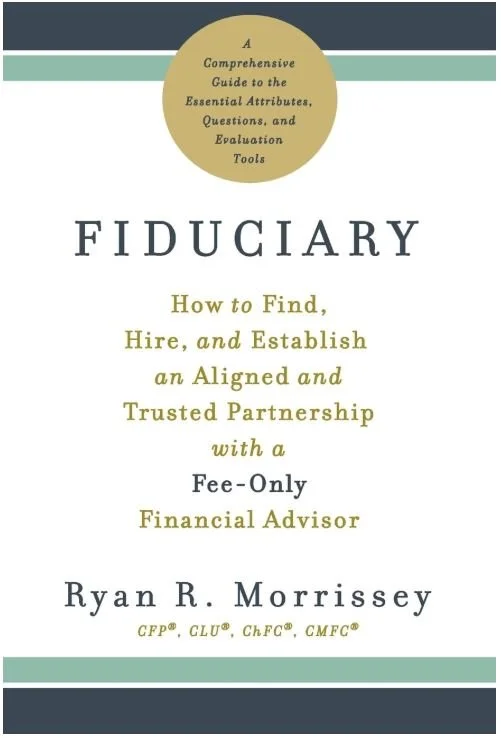
I strongly advocate for working with a fee-only fiduciary advisor, meaning:
No commissions
No product incentives
No hidden compensation
To help consumers find truly fee-only advisors, I created FindMyFiduciary.com, where advisors are vetted to confirm their compensation structure.
I also recommend asking potential advisors to sign a fiduciary oath and reviewing key interview questions before hiring anyone.
8. How Do I Get My Children to Start Saving for Retirement?
The key is earned income.
If your child has earned income, a Roth IRA is often the best starting point. Contributions grow tax-free, and withdrawals in retirement are tax-free.
Other great habits include:
Matching a portion of their earnings
Encouraging 401(k) participation if their employer offers a match
Teaching consistent saving and investing early
Time is their greatest advantage.
9. Should I Convert My Retirement Savings to a Roth IRA?
Often, yes—but it depends.
Roth conversions make sense if:
You expect higher tax rates in the future
You have lower-income years before Social Security and RMDs begin
You want to reduce future required minimum distributions
Recent tax law changes and expanded deductions may create especially attractive conversion opportunities over the next few years. This is highly individual and best evaluated with tax projections.
10. How Do I Protect My Investments During a Market Downturn?
The most important step is understanding your asset allocation.
More stocks mean more growth potential—and more volatility. Less volatility generally means lower long-term returns.
For most retirees, maintaining 50–70% in equities provides the best balance between income growth and inflation protection. There’s no way to eliminate volatility without sacrificing long-term success.
The key is choosing an allocation you can stick with during difficult markets.

I welcome to opportunity to be of service as you plan your ideal retirement — click here to book a free consultation!
Final Thoughts
2025 turned out to be another strong year for the markets, despite moments of significant volatility. While future years will bring uncertainty—as they always do—successful retirement planning comes down to preparation, discipline, and perspective.
If you have a question you’d like considered for a future episode, visit retirewithryan.com and click Ask a Question.
And if you’re ready to take the next step in building a confident retirement plan, visit retirewithryan.com, click Courses, then Retirement Readiness On Demand, and use code RETIRE99 for the $99 listener discount.
Here’s to an excellent 2026—I look forward to continuing the conversation.
Written by Ryan Morrissey
Founder & Principal Advisor of Morrissey Wealth Management
Host of the Retire with Ryan Podcast