
In-Plan Roth Conversions: How to Move Money From a Traditional 401(k) to a Roth 401(k)
If you’re maximizing your retirement contributions and looking for ways to create more tax-free income in retirement, an in-plan Roth conversion may be a strategy worth considering.
Many employees are familiar with contributing to a traditional 401(k) or even completing a Roth IRA conversion—but fewer understand that some employer-sponsored retirement plans allow you to convert money inside your 401(k) from pre-tax or after-tax dollars into a Roth account.
In this article, we’ll break down:
What an in-plan Roth conversion is
How it works
The potential tax benefits and drawbacks
A real-world client example showing how this strategy can work
Let’s begin.
What Is an In-Plan Roth Conversion?
An in-plan Roth conversion allows you to move money from a traditional pre-tax 401(k) into a Roth 401(k) within the same employer-sponsored retirement plan.
Unlike a Roth IRA conversion—where money typically moves from a traditional IRA into a Roth IRA at firms like Charles Schwab or Fidelity Investments—an in-plan conversion keeps everything inside your workplace retirement plan.
That means:
No new account needs to be opened
Your money stays in the same plan
Your investments may remain unchanged depending on the plan
This strategy can be appealing for employees who:
Want to build tax-free retirement income
Expect to be in a higher tax bracket in retirement
Currently find themselves in a lower-than-usual tax bracket
Already have after-tax money in their 401(k)

How Does an In-Plan Roth Conversion Work?
The process is relatively straightforward:
Identify eligible funds inside your 401(k)
Confirm your plan allows in-plan Roth conversions
Convert eligible pre-tax or after-tax dollars into the Roth 401(k)
Pay income taxes on any pre-tax dollars or untaxed gains being converted
Once converted:
Future qualified withdrawals may be 100% tax-free
Future growth occurs inside the Roth account
This can create significant long-term tax savings.
Does Your 401(k) Allow In-Plan Roth Conversions?
Not every plan allows this—but many do.
To find out, contact your plan administrator, such as:
Fidelity Investments
The Vanguard Group
T. Rowe Price
Or review your Summary Plan Description (SPD) for plan rules.
In my experience working with hundreds of retirement planning clients, I’m seeing this feature added to more and more workplace retirement plans.
The Hidden Opportunity: After-Tax 401(k) Contributions
Some employers allow employees to contribute after-tax dollars to their 401(k) once they hit the standard annual contribution limits.
This creates a major planning opportunity.
Why?
Because if those after-tax dollars stay in the after-tax bucket:
The principal remains after-tax
But investment gains may become taxable later
That’s where converting those dollars to Roth can be powerful.
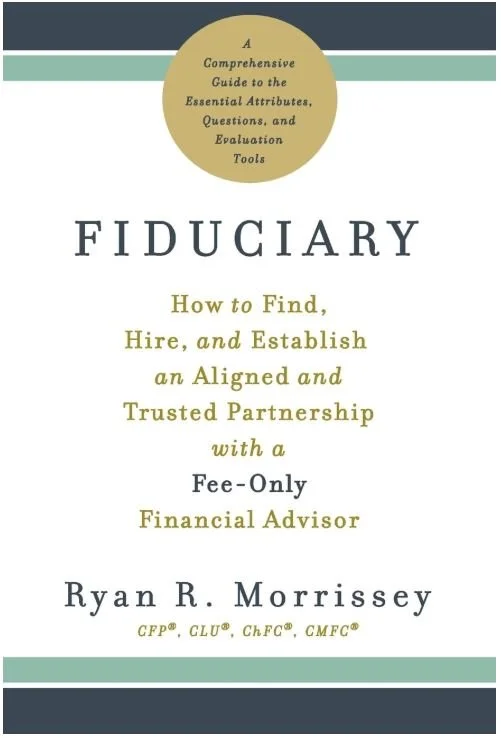
Click here to get your FREE electronic copy of:
Fiduciary - How to Find, Hire, and Establish an Aligned Trusted Partnership with a Fee-Only Financial Advisor
Real Client Example: How an In-Plan Roth Strategy Saved Taxes
One of my clients—let’s call her Amy—works for General Motors.
While reviewing her retirement plan, we noticed she had accumulated:
$63,000 in after-tax contributions
Approximately $40,000 in investment gains
Total: $103,000
When we contacted Fidelity Investments, we learned she had two options.
Option 1: Convert Everything Inside the 401(k)
Amy could complete an in-plan Roth conversion.
Result:
The $63,000 after-tax principal would not be taxed again
The $40,000 in gains would be taxable as ordinary income
Based on her income and state of residence, this would create roughly:
$10,500 in taxes
That’s approximately a 26% tax hit.
The benefit?
If Amy keeps working another 8–10 years and those funds grow inside the Roth account, that money could potentially double and create $200,000+ of tax-free retirement assets.
Option 2: Roll the Money Outside the 401(k)
Amy’s employer plan also allowed partial in-service rollovers.
This meant she could:
Move the after-tax contributions:
$63,000 → Roth IRA
Move the gains:
$40,000 → Traditional IRA
This avoided immediate taxation.
Instead of paying $10,500 today, Amy preserved liquidity while still positioning future growth for tax efficiency.
Ultimately, this is the strategy she chose.

Prefer to listen to my podcast episode on this topic? Click here
The Pros of an In-Plan Roth Conversion
1. Tax-Free Growth
Once funds are in the Roth account, future qualified withdrawals can be tax-free.
2. More Tax Diversification
Having both pre-tax and Roth assets gives you flexibility when withdrawing in retirement.
3. Potentially Lower Lifetime Taxes
If tax rates rise in the future—or your income increases—you may save significantly.
4. No Need to Leave Your Employer
Unlike some rollover strategies, this may be possible while still employed.
The Cons of an In-Plan Roth Conversion
1. Immediate Tax Bill
Converting pre-tax money creates taxable income.
2. Potential Bracket Creep
Large conversions may push you into a higher marginal tax bracket.
3. Plan Restrictions
Not every employer plan allows:
In-plan conversions
Partial rollovers
Automatic conversions
Can This Be Automated?
Some plans allow automatic conversion of after-tax contributions into Roth accounts—often called the Mega Backdoor Roth strategy.
Others require manual requests.
In Amy’s case, she’ll need to contact Fidelity several times per year to process conversions manually.

Should You Consider an In-Plan Roth Conversion?
This strategy may make sense if:
✅ You have after-tax money in your 401(k)
✅ You’re in a lower tax bracket this year
✅ You want more tax-free retirement income
✅ You’re maximizing annual retirement contributions
✅ You expect higher future tax rates
It may be less attractive if:
❌ The tax bill would be too large
❌ You need the liquidity for other goals
❌ Your plan offers better rollover alternatives
Final Thoughts
An in-plan Roth conversion can be a powerful retirement tax planning strategy—but the details matter.
The difference between converting inside the plan versus rolling funds outside the plan could save—or cost—you thousands in taxes.
If you have after-tax money in your 401(k), don’t ignore it. Review your plan rules, understand your options, and make sure your money is positioned to work as efficiently as possible.
As I often say:
Inspect what you expect.
If you’re unsure whether your 401(k) allows in-plan Roth conversions—or whether it makes sense in your situation—consider working with a qualified financial planner or tax professional.
Have a great week—and I’ll talk to you next Tuesday.
Written by Ryan Morrissey CFP®, CLU®, CHFC®, CMFC
Founder & Principal Advisor of Morrissey Wealth Management
Host of the Retire with Ryan Podcast