
Can You Live Off Dividends Alone in Retirement? Pros, Cons, and What Retirees Need to Know
One of the most common questions I hear from pre-retirees and retirees is:
“Can I just live off the dividends from my portfolio in retirement?”
It’s an understandable question. The idea of living off passive income—never having to sell investments, simply collecting dividend checks—sounds appealing.
But is building a dividend-only retirement portfolio actually the best strategy?
The short answer: It can work—but it may not always be the most effective or tax-efficient approach.
In this article, we’ll break down:
What dividend investing means in retirement
The benefits of dividend-paying stocks
The risks of relying solely on dividends
Alternative income strategies for retirees
How to think about building a retirement portfolio designed for longevity
This article is based on Episode 305 of the Retire With Ryan podcast.

What Are Dividend Stocks?
A dividend is a portion of a company’s profits that is paid out to shareholders.
For example, if you own shares of a company like AT&T, the company may pay you quarterly dividends simply for owning the stock.
Many retirees are attracted to dividend stocks because they provide:
Ongoing income
Potential inflation protection
The ability to avoid selling investments for cash flow
At first glance, it sounds like the perfect retirement strategy.
But there’s more to consider.
Can You Actually Live Off Dividends in Retirement?
Yes—you absolutely can.
A retiree could build a portfolio of high-dividend-paying companies or dividend-focused funds and use those distributions as income.
For example, you might screen for companies paying 4%+ dividend yields.
There are hundreds of companies that meet that criteria.
You can also invest in dividend-focused ETFs such as:
Schwab U.S. Dividend Equity ETF (SCHD)
JPMorgan Equity Premium Income ETF (JEPI)
These funds can generate meaningful income.
So yes, from a purely mathematical standpoint, living off dividends is possible.
The bigger question is:
Should you?
The Hidden Risks of a Dividend-Only Retirement Strategy
1. Sector Concentration Risk
Many high-dividend stocks tend to cluster in only a handful of industries, such as:
Energy
Utilities
Consumer staples
Healthcare
Real estate
That means a dividend-focused portfolio can become less diversified.
Meanwhile, sectors that have driven significant market growth in recent years—such as technology—may have smaller weightings.
This creates concentration risk.
2. Dividend Stocks Can Underperform
A stock paying a high dividend doesn’t automatically mean it’s a better investment.
For example, many investors are familiar with AT&T because of its historically strong dividend.
But over certain periods, dividend-focused companies may significantly underperform a broadly diversified market portfolio.
That creates a major retirement planning issue:
Retirees don’t just need income.
They need income that grows over time and keeps pace with inflation.
If your portfolio underperforms for years, your purchasing power may decline.
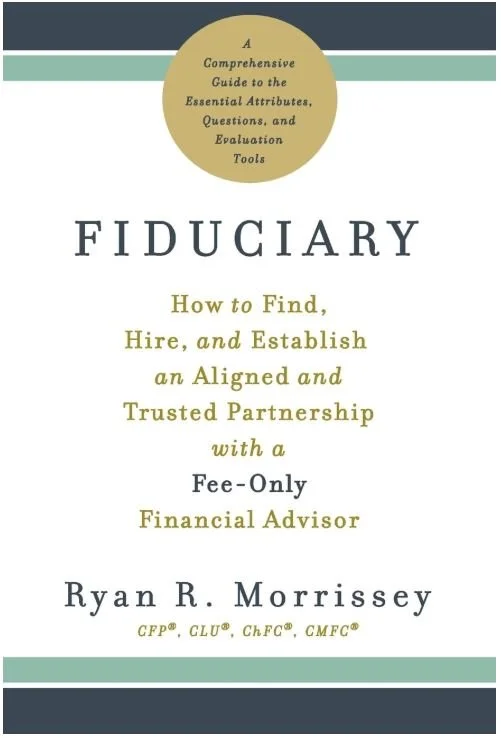
Click here to get your FREE electronic copy of:
Fiduciary - How to Find, Hire, and Establish an Aligned Trusted Partnership with a Fee-Only Financial Advisor
3. Dividends Are Not Guaranteed
One of the biggest misconceptions retirees have is believing dividends are “safe” or “guaranteed.”
They’re not.
Companies can:
Reduce dividends
Suspend dividends
Eliminate dividends altogether
When dividend cuts happen, stock prices often fall sharply as well.
That means you can lose:
Income
Principal value
At the same time.
That’s a dangerous combination in retirement.
What About High-Income ETFs?
In recent years, income-focused ETFs like JPMorgan Equity Premium Income ETF (JEPI) have become popular.
These funds often advertise yields of 8%–10% or higher.
Sounds great… but how?
These funds typically generate income by selling covered call options.
Without getting overly technical:
They generate income by selling away some of the future upside of the stocks they own.
That means:
Higher current income
Lower long-term growth potential
This may be appropriate for some retirees…
But if your portfolio sacrifices too much growth, you may struggle to keep up with inflation over a 20–30 year retirement.

Prefer to listen to my podcast episode on this topic? Click Here
The Tax Problem With Dividend Investing
Another issue many retirees overlook is taxes.
If dividend-paying investments are held in a taxable brokerage account:
Dividends are taxable in the year they’re received—whether you spend them or not.
This can create unwanted taxable income.
That could potentially affect:
ACA health insurance subsidies
Social Security taxation
Medicare IRMAA surcharges
Capital gains planning opportunities
By contrast, a growth-oriented portfolio gives you more control over when you realize gains.
That flexibility can be valuable in retirement tax planning.
A Better Alternative: Total Return Investing
Instead of focusing only on dividends, many retirees may benefit more from a total return strategy.
A total return portfolio focuses on:
Capital appreciation
Dividend income
Interest income
Tax efficiency
Diversification
Rather than asking:
“How much dividend income does this portfolio produce?”
You instead ask:
“How can this portfolio generate sustainable income while preserving long-term purchasing power?”
This often means using:
Broad stock index funds
Bonds for stability
Cash reserves for liquidity
Tax-aware withdrawal planning
For example, a retiree may own:
U.S. stocks
International stocks
Bonds
Cash equivalents
This can provide better diversification and potentially better long-term outcomes than concentrating in high-yield dividend stocks alone.
How Do You Generate Income Without Relying Only on Dividends?
One strategy retirees may consider is a dynamic withdrawal strategy, such as the Guyton-Klinger Guardrails Strategy.
This approach adjusts withdrawals based on:
Portfolio performance
Market conditions
Inflation
Spending flexibility
Instead of forcing your portfolio to generate income through dividends alone, you create income strategically.
This often gives retirees:
More flexibility
Better diversification
Potentially stronger long-term outcomes

Final Thoughts: Should You Live Off Dividends in Retirement?
Dividend investing isn’t bad.
In fact, dividend-paying companies will likely play some role in most diversified portfolios.
But building your retirement entirely around dividends may create unnecessary risks.
Before committing to a dividend-only strategy, ask yourself:
Is my portfolio diversified?
Am I sacrificing growth?
Am I taking on too much sector concentration?
How will taxes impact my income strategy?
Will this portfolio keep up with inflation over the next 20–30 years?
Retirement income planning is about much more than simply chasing yield.
It’s about building a portfolio that supports your lifestyle, protects your purchasing power, and helps your money last.
If you’re approaching retirement and wondering how to create income from your portfolio, working with a CFP® professional can help you stress-test different strategies before making major decisions.
Have a great week—and I’ll talk to you next Tuesday.
Written by Ryan Morrissey CFP®, CLU®, CHFC®, CMFC
Founder & Principal Advisor of Morrissey Wealth Management
Host of the Retire with Ryan Podcast