
Is a Mortgage Rate Buydown the Right Fit For You?
Interest rates have been steadily increasing in recent months and, in some instances, have prevented people from being able to afford to buy the home they dreamed of. Mortgage lenders are using some creative ways to allow people to buy a home in an environment where interest rates are soaring. One way is a mortgage rate buydown. Mortgage buydown products have been around for a while but are typically only used when the situation of need arises. There are a few different buydown options which I will explain in detail, so you have all the information you need to make an informed decision.
Key Takeaways
· What is a mortgage rate buydown?
· Mortgage points
· Temporary buydown
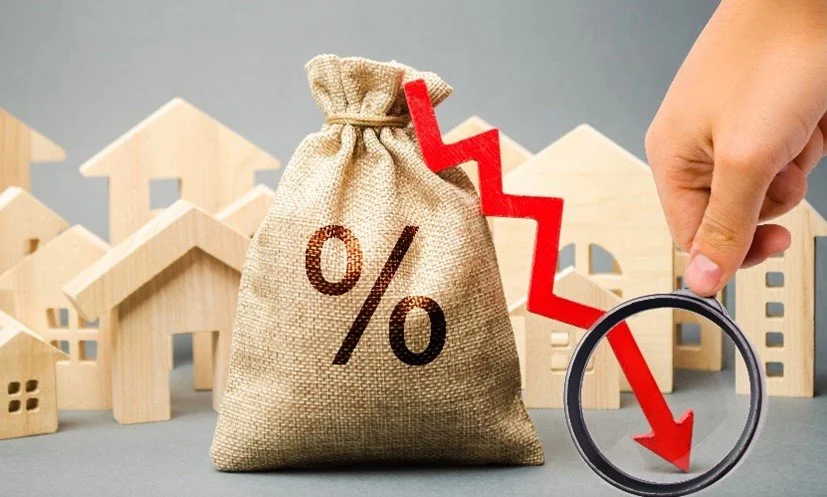
A mortgage rate buydown is a technique where you pay money upfront for a lower monthly mortgage payment. It is a reduction in the interest rate, either temporary or permanent, depending on the loan you choose. The two most common options are the permanent buydown and temporary buydown.
Permanent Mortgage Rate Buydown
One method to lower your mortgage payment is a permanent mortgage rate buydown. You pay upfront points at closing in exchange for a reduced interest rate. In general, you pay 1% of the loan upfront and you will receive a 0.25% interest rate reduction for the life of the loan. There is a rate reduction for each upfront point paid. This can be a power tool as the reduction permanently lowers your mortgage payment for the life of the loan.

Temporary Mortgage Rate Buydown
Another option is called a temporary mortgage rate buydown which allows you to lower your rate for a specific period of time, typically a year or two, and then the rate reverts back to the original rate for the remainder of the loan. In this scenario, the upfront buydown is often paid for by the seller, builder, or lender with a buyer’s credit at closing. The credit is then deposited into a separate escrow account and a portion is drawn out of that specific account monthly until the money is depleted. This is how your mortgage payment is initially lower. Once that escrow account runs out, you will be required to pay the full original mortgage payment. It is important to remember that you must qualify for the mortgage with the original mortgage payment for this program.
Mortgage lenders typically have a few temporary buydown options:
· 1/0 buydown – The borrower receives a 1% discount in year one
· 2/1 buydown – The borrower receives a 2% discount in year one and 1% discount in year two
· 3/2/1 buydown – The borrower receives a 3% discount in year one, 2% discount in year two and 1% discount in year three (this is typically the most expensive option)
A temporary buydown is a popular tactic to use if you anticipate mortgage rates declining within the first two years after closing on your mortgage. You can then refinance to a lower rate, decreasing your mortgage go forward. Sometimes this approach is used if you anticipate your income increasing significantly in the future.
Which Option Is the Best Fit?
Both options have pros and cons. Let’s use an example to show how the temporary buydown works and possibly help you figure out if a buydown would be a good fit for you. You can use this calculator to input the numbers appropriate of your personal situation. I used this calculator to show an example of what a 2/1 temporary mortgage buydown would look like this:
· $500,000 purchase price
· $100,000 down payment
· 30-year term
· 7% interest rate years 3-30
· 5% interest rate in year 1 and 6% interest rate in year 2
· Seller or builder credit (with this calculator, $9,325.20)
In this scenario, your mortgage payment would be $2,145.28 in year one and $2,396.21 in year two. In year three through thirty, the mortgage payment is $2,659.30. Total savings for year one and two is $9,325.20 (equal to the credit). Unlike the buydown option with points, the upfront credit comes from another source, seller, builder, or lender, so that money would not come out of your pocket, hence saving you money. You would then have the option to refinance or keep the loan with the original terms. Keep in mind that a new loan has many fees so you need to carefully consider those fees and factor those costs in.
The permanent mortgage rate buydown looks different than the temporary buydown. You must pay for the points upfront, which would come out of your own pocket. The cost of points divided by the monthly savings is a quick way to calculate the breakeven point. Let’s look at an example using this mortgage calculator and see what the breakeven point is. I used the following factors to in this scenario:
· $500,000 purchase price
· $100,000 down payment
· 30-year term
· 7% interest rate
· Pay 4 points or $16,000 upfront at closing for a 1% interest rate reduction
In this scenario, you would pay $16,000 upfront at closing. This would result in your monthly payment being $263.01 less per month for the life of the loan. After 5 years and 1 month, you would break even and result in over $78,000 in savings if you kept this loan and paid it off.
There are advantages and disadvantages to both mortgage buydown options. The most evident advantage of a buydown is the interest savings but there are a few other pieces to consider. You can ease into higher payments later. Home ownership is typically the most expensive in the first few years. Renovations, moving expenses and furnishing the home can add up quickly. Borrowers can expect these expenses will decrease significantly in the future and allow more money to be available for the mortgage payment.
Keep in mind that once the buydown rate ends, you must make the higher monthly payment. If you anticipate your income increasing and it doesn’t increase or doesn’t increase enough, it could make making the monthly payments difficult. Most people end up refinancing their loan or selling their home and never actually pay off the initial loan, so you may not realize the full savings in this situation.
Buying a home can be an overwhelming time in your life so it’s important to lean on experts like realtors and mortgage brokers to guide you in the process. Not all lenders offer these types of loans so carefully research the lender if you want to use one of these programs. Whether a mortgage rate buydown works for you or not, it is important to consider all aspects of your mortgage before signing on the dotted line.
Thank you for reading this blog. A few things that I could assist you with are investment management, retirement and tax planning, insurance review, etc. If you are interested, you can follow the link to my calendar to book a consultation. This would be a quick 20-minute phone call where we can discuss your needs to understand if my expertise is a fit for your needs.