
5 Tax Mistakes to Avoid in Your First Years of Retirement
Many people enter retirement assuming their taxes will automatically go down.
After all, you're no longer receiving a paycheck, you're no longer commuting to work, and you may have fewer expenses than you did during your working years.
But retirement doesn't necessarily make your taxes simpler—or lower.
Once your paycheck disappears, you may begin receiving income from several different sources, including:
Social Security
Pensions
Traditional IRAs and 401(k)s
Roth accounts
Brokerage accounts
Interest and dividends
And each can have different tax consequences.
The first several years of retirement can actually provide some of your best tax-planning opportunities. But they can also be the years when seemingly small decisions create unnecessary taxes, Medicare surcharges, or underpayment penalties.
Here are five tax mistakes to avoid in your initial retirement years and some strategies you can use to potentially reduce your lifetime tax bill.

Tax Mistake #1: Not Planning for Taxes on Social Security
One of the first mistakes retirees make is assuming their Social Security benefits aren't taxable.
Depending on your other income, up to 85% of your Social Security benefits can be included in your taxable income.
Notice that I didn't say you pay an 85% tax rate on Social Security.
Instead, up to 85% of your benefit may be included in the income used to calculate your federal income tax.
How Is Social Security Taxed?
The IRS looks at a calculation commonly referred to as combined income.
For this purpose, you generally start with:
**Adjusted Gross Income
Tax-Exempt Interest
+ 50% of Social Security Benefits**
For an individual filer, the applicable base amounts begin at $25,000.
For married couples filing jointly, the applicable base amount begins at $32,000.
At higher combined-income levels, up to 85% of your Social Security benefits can become taxable.
This is why your other retirement-income decisions can affect the taxation of your Social Security.
Traditional IRA distributions, pensions, wages, interest, dividends, and other income can all affect the calculation.
How Can You Withhold Taxes From Social Security?
If you determine that a portion of your Social Security will be taxable, you don't necessarily have to wait until tax season to pay the bill.
You can elect federal income-tax withholding from your Social Security benefits.
Another option is to cover the expected tax liability through withholding from other income sources.
For example, you might increase withholding from your:
Pension
IRA distributions
Wages if you're still working
Other eligible retirement distributions
This can be particularly useful because Social Security doesn't withhold state income taxes.
If your state taxes Social Security benefits, you may need to account for that liability through estimated tax payments or withholding from another source.
The key is to estimate your total tax liability before you begin taking retirement income rather than discovering the problem when you file your return the following year.
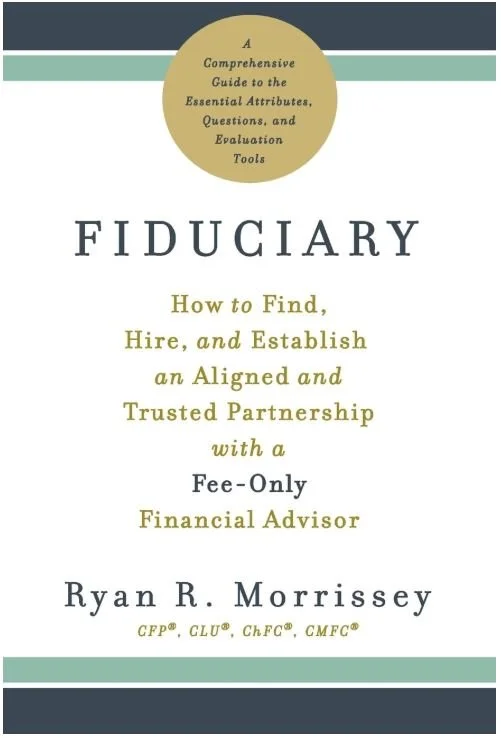
Click here to get your FREE electronic copy of:
Fiduciary - How to Find, Hire, and Establish an Aligned Trusted Partnership with a Fee-Only Financial Advisor
Tax Mistake #2: Accidentally Triggering Medicare IRMAA
Another potentially expensive retirement tax mistake has nothing to do with your income-tax bracket.
It's IRMAA.
IRMAA stands for the Income-Related Monthly Adjustment Amount.
If your income exceeds certain thresholds, you can pay additional premiums for Medicare Part B and Part D.
For 2026, the standard Medicare Part B premium is $202.90 per month. Higher-income beneficiaries can pay substantially more.
And remember:
IRMAA applies per person.
For a married couple in which both spouses are on Medicare, crossing an IRMAA threshold can therefore affect the Medicare costs of both spouses.
How Does IRMAA Work?
Medicare generally uses the modified adjusted gross income reported on your federal tax return from two years earlier.
For example:
Your 2024 income generally determines your 2026 IRMAA.
That delay is important.
A large IRA distribution today may not increase your Medicare premiums immediately. Instead, you may see the consequences two years later.
Retirement Decisions That Can Trigger IRMAA
Imagine you're retired and decide you want to pay off your remaining mortgage.
You withdraw $150,000 from your traditional IRA.
That withdrawal may accomplish your goal—but it could also substantially increase your modified adjusted gross income.
Depending on your circumstances, that could:
Increase your federal income taxes
Make more of your Social Security taxable
Push you into a higher Medicare IRMAA tier
That's why large retirement distributions should generally be considered within the context of your entire tax plan.
Instead of taking one large IRA distribution, you might evaluate whether it makes sense to spread withdrawals over multiple tax years or use a combination of:
Traditional IRA + Roth IRA + taxable brokerage + cash
to manage your taxable income.
That doesn't mean you should avoid IRMAA at all costs.
Sometimes recognizing additional income and paying IRMAA can still produce a better long-term financial result.
The objective is to understand the consequence before you create the income.
Can You Appeal IRMAA After Retiring?
Potentially.
This is particularly important for new retirees.
Because Medicare generally looks back two years, your Medicare premium could initially be based on income from when you were still working.
But your current retirement income may be dramatically lower.
The Social Security Administration recognizes several life-changing events that can potentially support a request to reduce IRMAA, including events such as:
Work stoppage
Work reduction
Marriage
Divorce or annulment
Death of a spouse
Loss of certain income-producing property
Loss of certain pension income
Certain employer settlement payments
The applicable form is SSA-44.
So if you recently retired and receive an IRMAA notice based on your previous working income, don't automatically assume you're stuck paying the higher premium.
Determine whether you qualify to request a new determination.
Tax Mistake #3: Ignoring State Taxes in Retirement
Federal income taxes get most of the attention, but where you live during retirement can have a significant effect on your taxes.
States treat retirement income very differently.
Depending on where you live, your state may tax—or provide exclusions or deductions for—income from:
Social Security
Pensions
Traditional IRAs
401(k)s
Investment income
Some states don't impose an individual income tax at all.
Others impose an income tax but provide favorable treatment for certain types of retirement income.
That's why simply comparing state income-tax rates doesn't tell the whole story.
Should You Move to a State With No Income Tax?
Taxes can certainly be one factor when deciding where to retire.
But they shouldn't necessarily be the only factor.
A state without an individual income tax could potentially have higher:
Property taxes
Sales taxes
Insurance costs
Housing costs
Healthcare costs
Your overall cost of living matters more than one individual tax.
You also need to consider family, healthcare providers, climate, lifestyle, and your social network.

Understand Your Own State's Retirement Tax Rules
You don't necessarily need to move across the country to find tax-planning opportunities.
Your current state may already provide exclusions, deductions, or other favorable treatment for retirees who satisfy certain requirements.
The mistake is simply not knowing the rules that apply where you live.
Before determining how much to withdraw from your retirement accounts each year, understand how those distributions interact with both your federal and state income taxes.
Tax Mistake #4: Waiting Too Long to Consider Roth Conversions
The years immediately following retirement can potentially create a unique tax-planning opportunity.
You've stopped receiving a paycheck.
But perhaps you haven't started Social Security yet.
And required minimum distributions may still be years away.
This period can create what I often think of as a retirement tax-planning window.
For some retirees, intentionally recognizing income through Roth conversions during these years can potentially reduce taxes later in retirement.
What Is a Roth Conversion?
A Roth conversion generally involves moving money from a pre-tax retirement account, such as a traditional IRA, into a Roth IRA.
The taxable portion of the amount converted is generally included in your income for that year.
Why would you voluntarily pay taxes early?
Because once those assets are inside the Roth IRA, they have the opportunity to grow tax-free, and qualified withdrawals can ultimately be tax-free.
The strategy can be particularly attractive if you're paying tax at a lower rate today than you otherwise expect to pay on those dollars later.
Why Early Retirement Can Be a Good Time for Roth Conversions
Imagine you retire at 62.
You decide to delay Social Security until 67 or 70.
Your wages disappear when you retire, and your Social Security hasn't started.
That could leave you with several years of relatively low taxable income.
Rather than simply trying to pay the smallest possible tax bill each year, you could intentionally fill some of those lower tax brackets with Roth conversions.
Then, when Social Security and eventually required minimum distributions enter the picture, you've potentially reduced the amount remaining in your pre-tax retirement accounts.
Roth Conversions Aren't Always the Right Strategy
This is important.
Just because you can complete a Roth conversion doesn't mean you should.
A conversion can:
Increase your current federal income tax
Increase state income taxes
Affect Medicare IRMAA
Increase the taxable portion of Social Security
Consume cash that could otherwise remain invested
You should compare your current marginal tax rate with the rate you reasonably expect those dollars to face in the future.
Estate planning can matter as well.
If you expect to leave substantial retirement accounts to your children or other beneficiaries, their future tax situation may also factor into your Roth conversion strategy.
The objective isn't to convert as much as possible.
It's to determine whether strategic conversions can reduce your lifetime tax liability.

Prefer to watch my YouTube video on this topic? — CLICK HERE
Tax Mistake #5: Mismanaging Retirement Account Distributions and Tax Withholding
Once your paycheck stops, your employer is no longer automatically handling most of your income-tax withholding.
Now, that responsibility largely falls on you.
If you're taking distributions from a traditional IRA or other pre-tax retirement account, those taxable distributions can increase your federal—and potentially state—income-tax liability.
If you don't plan for that liability throughout the year, you could face an unexpectedly large tax bill and potentially an underpayment penalty.
What Is the Federal Tax Safe Harbor?
The United States generally operates under a pay-as-you-go income-tax system.
For many taxpayers, one way to avoid an underpayment penalty is to satisfy an applicable safe harbor.
Generally, taxpayers can avoid the federal estimated-tax penalty if they pay enough through withholding and/or timely estimated payments to satisfy the applicable requirements.
Common benchmarks include paying at least:
90% of your current year's tax liability
or
100% of the prior year's tax liability
For certain higher-income taxpayers, the prior-year threshold increases to:
110% of the prior year's tax liability.
The higher-income rule generally applies when prior-year adjusted gross income exceeds $150,000, or $75,000 if married filing separately.
There are additional rules and exceptions, so your individual circumstances should be considered.
Why IRA Withholding Can Be Particularly Useful in Retirement
Here's a retirement tax-planning strategy many people don't realize exists.
Federal income-tax withholding is generally treated differently from quarterly estimated tax payments for purposes of determining when taxes were paid during the year.
This can make withholding from an IRA distribution late in the year particularly useful in some situations.
Imagine you retire and discover late in the year that you haven't paid enough federal tax.
Rather than simply waiting until April and potentially facing an underpayment penalty, you may be able to take an IRA distribution and direct some or even all of that distribution toward federal income-tax withholding.
Depending on the circumstances, that withholding can help you satisfy your required annual payment.
This can make IRA withholding an extremely useful year-end tax-planning tool for retirees.
However, your specific tax situation and any applicable exceptions should be reviewed before relying on this strategy.
Estimated Tax Payments vs. Withholding in Retirement
Retirees generally have two primary ways to prepay federal income taxes:
Tax Withholding
Taxes can potentially be withheld from income sources such as:
Pension payments
Traditional IRA distributions
401(k) distributions
Social Security benefits for federal withholding
Wages if you're still employed
Quarterly Estimated Tax Payments
You can also make estimated tax payments directly to the IRS throughout the year.
The important thing is to have a system.
Don't simply take taxable retirement distributions throughout the year and assume you'll figure out the taxes next April.
Be Careful With Roth Conversion Tax Withholding
If you're completing a Roth conversion, you also need a plan for paying the resulting income tax.
Suppose you want to convert:
$100,000
from your traditional IRA to your Roth IRA.
One option is to withhold part of that $100,000 for taxes.
But that means less than the full $100,000 reaches the Roth IRA.
If you have sufficient cash available outside your retirement accounts, paying the conversion tax from outside funds can allow the entire $100,000 to move into the Roth IRA and continue growing within the account.
That can be particularly valuable when maximizing the amount moved into the Roth is part of your long-term strategy.
However, you still need to make sure your withholding and/or estimated tax payments are sufficient to satisfy your tax obligations.
Your First Years of Retirement Can Be Your Best Tax-Planning Years
The common theme across all five mistakes is simple:
Retirement tax planning should be proactive, not reactive.
The first few years after you stop working can provide an unusual amount of flexibility.
You may be able to decide:
When to start Social Security
Which accounts to withdraw from
How much to withdraw
Whether to complete Roth conversions
How much income to intentionally recognize
When to realize capital gains
How much tax to withhold
Eventually, you may have less control.
Social Security begins.
Pensions continue.
Required minimum distributions eventually begin.
Your taxable income can become more difficult to manage.
That's why the early retirement years shouldn't necessarily be about paying the least possible tax today.
They should be about developing a strategy that can potentially help you pay less tax over your entire retirement.
Final Thoughts
Taxes don't disappear when you retire.
In some ways, they can become more complicated.
Instead of having an employer automatically withhold taxes from every paycheck, you now have multiple accounts and income sources that need to work together.
The five mistakes to avoid are:
1. Failing to plan for taxes on Social Security
2. Accidentally triggering Medicare IRMAA
3. Ignoring state retirement taxes
4. Waiting too long to evaluate Roth conversions
5. Mismanaging retirement distributions and tax withholding
You don't necessarily need to avoid every tax or surcharge.
Sometimes paying additional taxes today can produce a better financial result over your lifetime.
The important thing is to understand the consequences before making the decision.
A comprehensive retirement tax projection can help you coordinate Social Security, Roth conversions, IRA distributions, Medicare premiums, state taxes, and withholding so each decision supports your broader retirement plan.
Have a great week—and I’ll talk to you next Tuesday.
Written by Ryan Morrissey CFP®, CLU®, CHFC®, CMFC
Founder & Principal Advisor of Morrissey Wealth Management
Host of the Retire with Ryan Podcast
____________________________________________________________________________________________________________________________
Frequently Asked Questions About Taxes in Retirement
Do you pay taxes on Social Security in retirement?
Potentially. Depending on your filing status and other income, up to 85% of your Social Security benefits can be included in taxable income for federal purposes. This doesn't mean you pay an 85% tax rate on your benefits.
How much Social Security income is taxable?
The taxable portion depends on your combined income and filing status. The IRS generally considers your adjusted gross income, tax-exempt interest, and one-half of your Social Security benefits when determining how much of your benefits may be taxable.
Can I have federal taxes withheld from Social Security?
Yes. You can elect voluntary federal income-tax withholding from Social Security benefits. You can also potentially cover the tax liability by increasing withholding from other income sources.
What is IRMAA in retirement?
IRMAA stands for Income-Related Monthly Adjustment Amount. It is an additional amount certain higher-income Medicare beneficiaries pay for Medicare Part B and Part D based on modified adjusted gross income.
Does an IRA withdrawal affect Medicare IRMAA?
It can. Taxable traditional IRA distributions generally increase your adjusted gross income and can therefore affect the modified adjusted gross income used to determine IRMAA.
Can I appeal IRMAA after I retire?
Potentially. Work stoppage and work reduction are among the life-changing events that may allow you to request a new IRMAA determination using Form SSA-44 when your income has fallen.
When is the best time to do Roth conversions in retirement?
For some retirees, the period after leaving work but before beginning Social Security and required minimum distributions can provide an attractive Roth conversion window. Whether conversions make sense depends on your current and expected future tax situation.
Should I do Roth conversions before Social Security?
Potentially. Delaying Social Security can sometimes create years of lower taxable income that can be used for strategic Roth conversions. However, the appropriate strategy depends on your income, tax rates, Medicare situation, spending needs, and other financial circumstances.
What is the tax safe harbor rule?
Generally, many taxpayers can avoid a federal underpayment penalty by paying enough tax during the year to meet an applicable safe harbor, such as 90% of current-year tax or 100% of prior-year tax. The prior-year threshold generally increases to 110% for certain higher-income taxpayers.
Can I withhold taxes from an IRA distribution at the end of the year?
Yes, federal income tax can generally be withheld from taxable IRA distributions. Withholding has special timing treatment under federal underpayment rules, which can make year-end IRA withholding useful in certain situations when a retiree discovers they haven't paid enough tax during the year.
Should I pay Roth conversion taxes from my IRA or cash?
If you have sufficient non-retirement assets, paying the conversion tax with outside funds can allow more of the converted amount to remain invested inside the Roth IRA. However, the appropriate approach depends on your cash flow, age, tax situation, and overall financial plan.
How can I reduce taxes during my first years of retirement?
Potential strategies include coordinating withdrawals among pre-tax, Roth, taxable, and cash accounts; evaluating Roth conversions; managing capital gains; planning Social Security; monitoring IRMAA thresholds; using appropriate tax withholding; and considering applicable state retirement-tax rules.